
Application of Laser Technology In The Field of Ceramic Substrates
Table of Contents
Advantages of Laser Technology
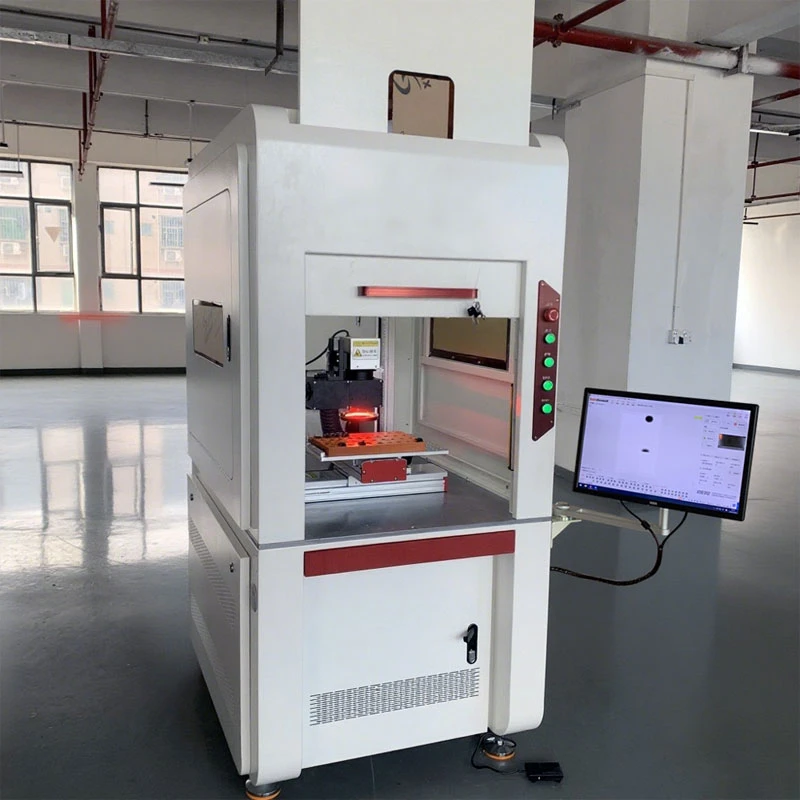
Laser processing is an advanced processing technology that is non-contact, tool-free, highly precise, and highly flexible. It has advantages such as high precision, high efficiency and controllability, small heat-affected zone, no cutting force, and no “tool” wear, making it one of the most ideal methods for ceramic processing today.
1) The laser cutting head does not contact the material surface, preventing scratches on the workpiece.
2) Narrow cutting gap saves material.
3) Small laser spot size, high energy density, high precision, high speed, and high stability in scribing width and depth.
4) Laser processing is precise, producing a smooth, burr-free cut surface.
5) Small heat-affected zone, minimal local deformation of the workpiece, and no mechanical deformation. Ceramic substrates are easily broken, requiring high-level processing technology, so laser drilling is often used. It is precise, fast, and efficient, enabling large-scale, batch drilling with no tool wear, meeting the requirements of high-density interconnection and precision development of ceramic substrates.
6) Good processing flexibility, capable of processing arbitrary shapes and cutting irregular profiles.
Application of Lasers In Ceramic Substrates
Laser processing has long been the mainstream application in the processing of various ceramic substrates. Currently, laser processing equipment for ceramic substrates is mainly used for cutting, scribing, drilling, and laser marking.
Laser scribing/cutting
Due to the large shrinkage rate during sintering, the dimensional accuracy of the sintered ceramic sheets cannot be guaranteed, making it impossible to accurately pre-cut various holes, grooves, and edges for assembly. Therefore, post-sintering processing is required. Laser cutting, however, is a non-contact processing method that eliminates internal stress in the product, minimizes edge chipping, and achieves high precision and yield.
Laser scribing, also known as scribe cutting or controlled fracture cutting, works by focusing a laser beam onto the surface of a ceramic substrate through a light guide system. This triggers an exothermic reaction, generating high temperatures that ablate, melt, and vaporize the scribing area, creating interconnected blind holes (grooves) on the ceramic surface. If stress is applied along the scribing area, the material easily and accurately breaks along the scribing line due to stress concentration, completing the slicing process.
Laser marking
Lasers are also widely used in the scribing process of ceramic substrates after sintering. Scribing involves using a laser to burn continuous, densely packed pits into the ceramic surface to form lines, which facilitates the division into independent small units after packaging.
Laser drilling
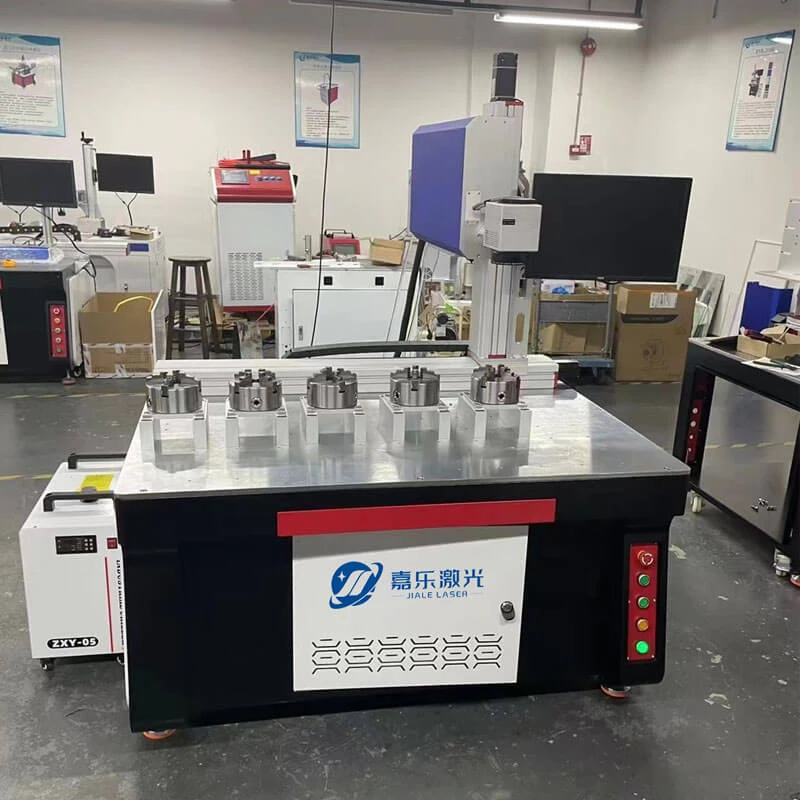
Laser drilling is the most widely used processing method in the fabrication of HTCC, LTCC, and DPC. A laser drilling machine is used to drill through the top and bottom surfaces of a substrate, creating a path for vertical interconnection between the upper and lower surfaces, enabling 3D packaging and integration of electronic devices.
Laser drilling uses different wavelengths of laser beams, such as infrared, green, ultraviolet, and CO2, to irradiate the surface of different ceramic materials. Each laser pulse burns away a portion of the material. Compared to mechanical drilling, laser drilling offers many advantages, including higher processing precision, lower material costs, and greater product flexibility.
Laser marking
Laser marking is the process of engraving QR codes onto ceramic substrates using a laser marking machine. It is a common laser processing technology that uses a high-energy-density laser to locally irradiate the workpiece, causing the surface material to vaporize or change color, thus leaving a permanent mark.
Conclusion
With the continuous development of the microelectronics industry, electronic components are gradually moving towards miniaturization and thinning, and the requirements for precision are also getting higher and higher. This will inevitably put forward higher and higher requirements for the processing degree of ceramic substrates, and laser technology has great potential.