
What types of molds can be cleaned using laser mold-cleaning equipment?
Traditional mold maintenance methods—such as sandblasting, dry ice blasting, chemical soaking, and manual grinding—often carry risks: they can scratch mold cavities, wear down intricate textures, or corrode chrome plating. Furthermore, these methods typically require disassembling the equipment and waiting for parts to dry, which leads to production downtime. In contrast, laser mold cleaning is a dry, non-destructive process. It uses pulsed laser energy to vaporize and remove surface residues, carbon deposits, and oxide layers. Because it does not damage the mold substrate or surface coatings and allows for in-situ cleaning (without the need for disassembly), it has become the preferred solution for mold maintenance in industries such as injection molding, die-casting, rubber manufacturing, 3C electronics, and automotive parts production. Below is a detailed look at the types of molds for which this technology is suitable.
I. Injection Molds (Most Widely Used)
This category includes molds for plastic components used in home appliance housings, automotive interiors, 3C electronics, medical consumables, and packaging.
Contaminants to be removed include: carbonized plastic deposits, pigment/toner buildup, mold-release agent films, residual material in runners and venting channels, and oil/grease on parting lines.
Advantages: Laser cleaning can precisely treat mirror-finish surfaces, textured or etched patterns, delicate rib structures, and thin-walled cavities without scratching high-gloss surfaces. In many cases, the molds can be cleaned directly on the machine, eliminating the need for disassembly and significantly reducing downtime. This effectively resolves issues such as black spots or pits on products, parts sticking to the mold, and uneven surface gloss.
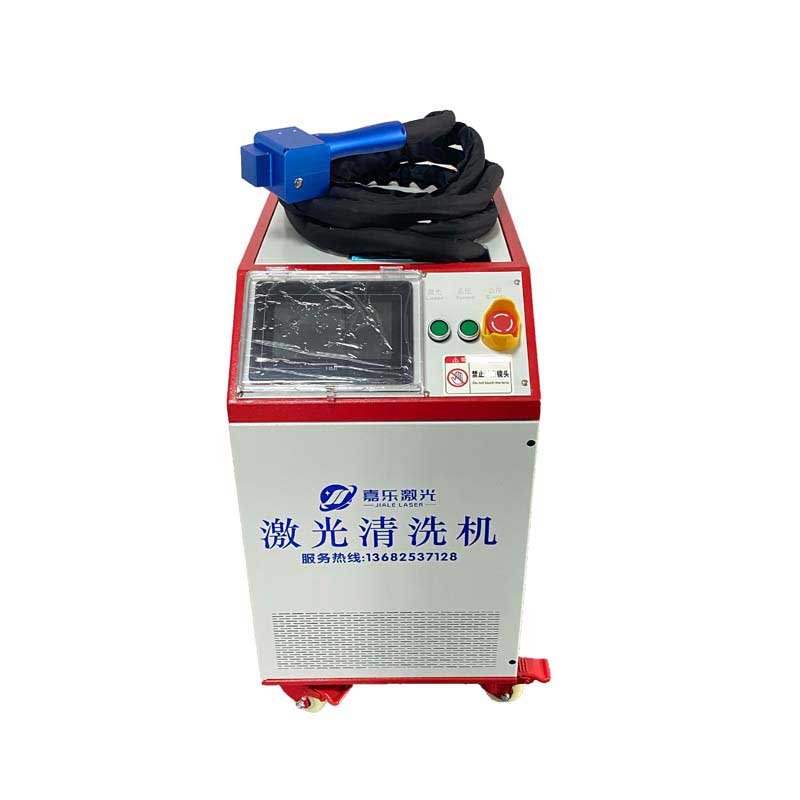
II. Rubber, Silicone, and Tire Vulcanization Molds
This includes molds for rubber seals, silicone components, tire treads, and shoe soles.
After prolonged vulcanization, residues such as cured rubber, carbon black, and accumulated mold-release agents become firmly bonded within grooves, tread patterns, and vent holes. Sandblasting can easily damage intricate patterns or clog tiny vent holes, while chemical agents may corrode the nitrided layer of the mold. Laser cleaning can reach deep into narrow grooves and complex three-dimensional patterns, stripping away vulcanization residues layer by layer and clearing air vents—all while preserving the precision of the mold’s original texture. For large tire molds, it even allows for targeted, localized cleaning without the need for complete disassembly.
III. Die-Casting Molds (Primarily for Aluminum and Zinc Alloys)
Suitable for molds used in the production of automotive die-cast parts, metal housings, and heat sinks.
Primary cleaning targets: Sintered release agent layers, high-temperature oxide scale, carbon deposits, aluminum dross, and surface oil/grease.
Because die-casting molds operate in high-temperature environments, they develop hard oxide layers. Laser cleaning offers precise control, ensuring the cavity surface is not gouged or damaged and that the mold’s dimensions remain unchanged. It is ideal for routine preventive maintenance, helping to delay the formation of thermal fatigue cracks.
IV. Stamping, Drawing, and Metal-Forming Molds
Includes various sheet metal stamping dies, drawing dies, bending dies, and cold-heading molds.
Laser cleaning targets: Stamping oil residues, light rust, oxide scale, and adhered metal debris.
Many stamping dies require high precision at their cutting edges and forming surfaces; traditional mechanical grinding can easily alter clearances. Laser-based, targeted rust and oil removal is perfect for daily mold maintenance, effectively extending the service life of the tooling.
V. Molds for Composite Materials, Carbon Fiber, and Fiberglass (FRP)
Used in the production of composite components for new energy vehicles, rail transit, and aerospace.
Contaminants: Residual resin, cured adhesive layers, and accumulated release agents.
Composite molds typically require a smooth, scratch-free surface. Laser cleaning is non-abrasive and leaves no secondary contamination (such as embedded particles), making it well-suited for the maintenance of high-precision composite tooling.
VI. Precision and Specialized Molds
Includes molds for optical lenses, medical precision components, IMD/IML (In-Mold Decoration/Labeling) films, and micro-precision inserts. These types of molds require extremely tight tolerances and high surface finish standards. By using low-power pulsed laser cleaning equipment with finely tuned parameters, one can remove trace oil and minor carbon deposits without damaging mirror-like surfaces or nano-coatings—a capability that traditional cleaning methods struggle to match.
Which mold-related scenarios require extra caution?
- Molds with soft surface coatings or standard paint layers: The laser will strip these coatings away; therefore, always perform a small-scale test before proceeding.
- Excessively thick or heavily sintered, stubborn carbon deposits: These are difficult to remove in a single pass; a multi-pass, layer-by-layer cleaning approach is recommended to prevent localized heat buildup.
- Certain non-metallic molds: These are generally unsuitable for laser cleaning.
- Always conduct a test run before full-scale cleaning to calibrate power settings and scanning speeds. For molds with chrome plating, nitriding, or PVD coatings, perform a test on a small, inconspicuous area first to ensure the coating remains intact.
Key Advantages of Laser Mold Cleaning Equipment
✅ Dry cleaning process: No chemical agents required, no liquid waste, and fully compliant with environmental regulations.
✅ Precise and controllable: Removes only the contaminants without damaging the mold substrate, surface textures, mirror finishes, or coatings.
✅ Supports in-situ (on-machine) cleaning: Eliminates the need for disassembly and reduces downtime associated with removing, reinstalling, and re-testing molds.
✅ Capable of cleaning deep grooves, narrow gaps, venting holes, and complex, hard-to-reach textured areas.
✅ Equipped with dust extraction/collection systems: Ensures a clean environment free of residual dust, making it ideal for cleanrooms and the medical or food-processing industries.
In short: Laser cleaning is highly suitable for precision molds with metal substrates, particularly when the primary contaminants are carbon deposits, adhesive residues, resins, mold-release agents, or light oxidation and oil. It is most widely applied to molds used in injection molding, tire manufacturing, and die-casting.