
What is Laser Marking?
Laser marking is a processing method that uses a high-energy-density laser beam to locally irradiate the surface of a workpiece, causing the surface material to vaporize or undergo a chemical reaction that changes color, thereby leaving a permanent mark.
Table of Contents
Laser Marking Principles
Thermal Processing Mechanism
When a high-energy-density laser beam irradiates a material surface, the material absorbs energy and its temperature rises sharply, causing the surface material to melt, vaporize, or undergo a chemical reaction (such as oxidation), forming a clear mark. For example, vaporization exposes the substrate on a metal surface, while plastics may change color due to photochemical reactions.
Cold Processing Mechanism (Applicable to Ultraviolet Lasers)
Ultraviolet photons break the molecular bonds in the material, initiating non-thermal damage and achieving “cold peeling.” This process has no heat-affected zone and is suitable for precision machining (such as marking on semiconductor chips and glass surfaces).
Core Advantages of Laser Marking
Non-contact Processing
No mechanical stress, avoiding workpiece deformation or damage, especially suitable for precision components (such as aero-engine blades and electronic components).
High Precision and Flexibility
Marking line width can be as small as 20 micrometers, depth less than 10 millimeters, and character size covers the millimeter to micrometer scale.
Supports complex patterns, barcodes, QR codes, etc., with significant anti-counterfeiting effects.
Wide Material Adaptability
Processes metals (iron, copper, aluminum), non-metals (plastics, glass, ceramics), and composite materials (coatings, electroplating layers), with applications spanning electronics, automotive, medical, and jewelry industries.
Environmentally Friendly and Highly Efficient
No chemical reagents consumed, no wastewater or waste generated, compliant with RoHS and other environmental standards.
Processing speed reaches several meters per second, supporting integration into automated production lines and improving production efficiency.
High Durability
Permanent marking, wear-resistant, and corrosion-resistant, suitable for product traceability and quality control.
Main types of Laser Marking Technology
Fiber Laser Marking Machine
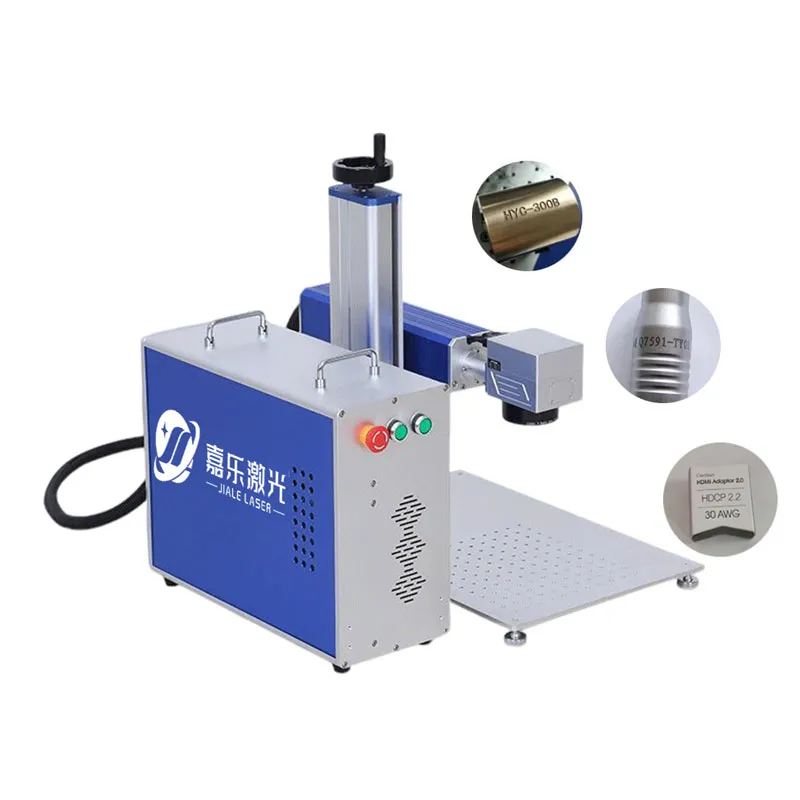
Wavelength: 1064nm (Near Infrared)
Features: High electro-optical conversion efficiency (>40%), long lifespan (over 100,000 hours), good beam quality, suitable for marking metals and some hard plastics.
Applications: Hardware tools, automotive parts, electronic components, jewelry.
CO₂ Laser Marking Machine
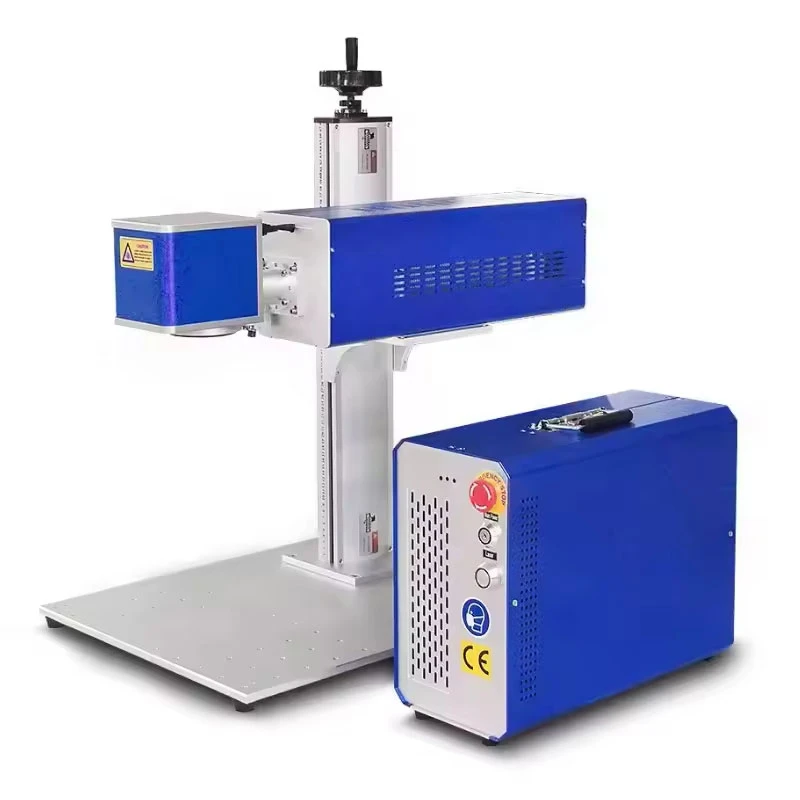
Wavelength: 10.6μm (Mid Infrared)
Features: Mature technology, low cost, but lower electro-optical conversion efficiency, requiring regular gas replacement.
Applications: Non-metallic materials (wood, leather, glass, plastic packaging).
UV Laser Marking Machine
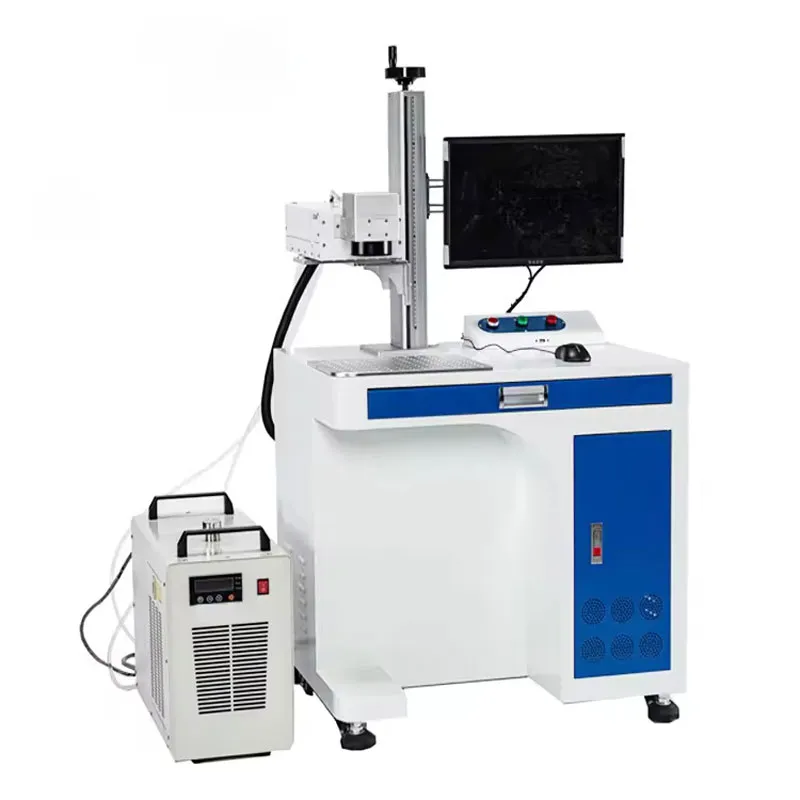
Wavelength: 355nm (UV)
Features: “Cold processing” technology, extremely small heat-affected zone, extremely high precision, but high equipment cost.
Applications: Electronic semiconductors, pharmaceutical packaging, invisible QR codes on glass, high-contrast marking on plastics.
Applications of laser marking
Electronics Industry
Imprinting serial numbers and brand logos on smartphone and tablet casings.
Marking tiny components on circuit boards (e.g., removing oxide layers from chip pins).
Automotive Manufacturing
Imprinting safety markings and batch numbers on critical parts such as engine components, chassis, and tires.
Cleaning joints before soldering to improve soldering quality.
Medical Field
Marking surgical instruments, medical consumables, and biological sample tubes to ensure traceability and safe use.
Surface treatment of implants to meet bone cell adhesion requirements.
Food and Packaging
Printing production dates and anti-counterfeiting codes on packaging materials (e.g., PET bottles, cardboard boxes) for contactless processing and hygiene.
Jewelry and Luxury Goods
Imprinting brand logos and serial numbers on metal jewelry, and micro-carving patterns on gemstones for personalized anti-counterfeiting.
Conclusion
Laser marking technology, acting as a “photolithography tool” in modern industrial processing, redefines the boundaries of product identification and surface treatment with its non-contact, high-precision, environmentally friendly, and permanent characteristics. From nanoscale marking of microscopic electronic components to batch traceability of macroscopic automotive parts; from sterile anti-counterfeiting of medical consumables to personalized micro-engraving in jewelry art, laser marking not only meets the manufacturing industry’s dual pursuit of efficiency and quality but has also become a key force driving the intelligent and green transformation of industries.