
What is Green Laser Marking?
Table of Contents
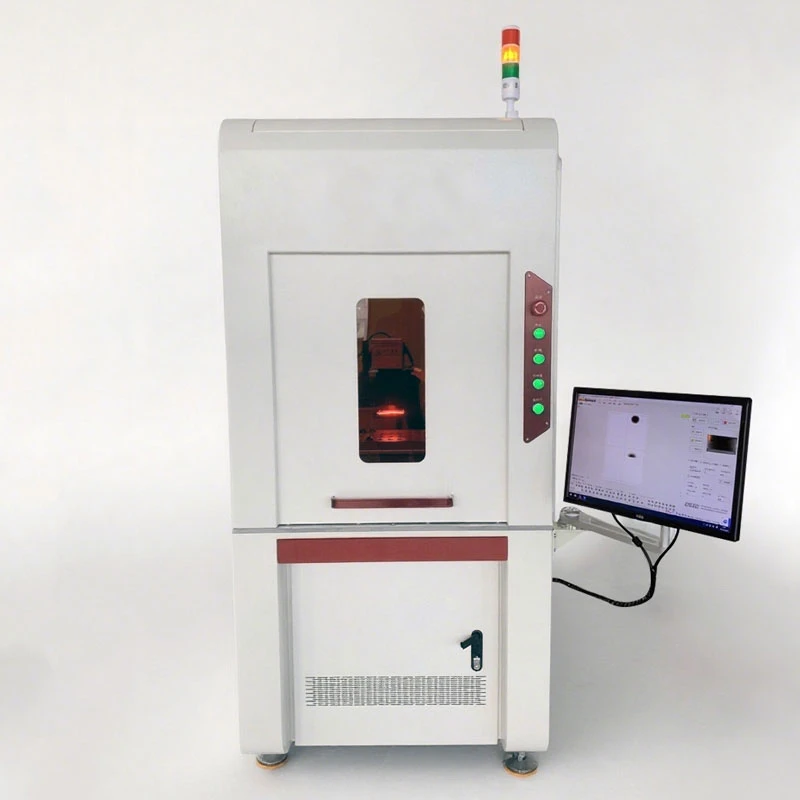
Green laser marking is a laser marking technology that uses 532nm visible green light as the light source. At its core, it uses frequency doubling technology to convert 1064nm infrared laser into green light, combining the advantages of precise cold processing and high-contrast marking. It is specially designed for highly reflective metals, transparent/light-colored materials and precision small parts.
Green Laser Marking Principle
Green laser marking machines use Nd:YVO₄ or Nd:YAG crystals as the medium. A 1064nm infrared laser is generated by semiconductor pumping, and then frequency-doubled by a KTP nonlinear crystal to generate 532nm green visible light. After scanning by a high-speed galvanometer and focusing by a field lens, the beam acts on the material surface with low heat and high photon energy. Through photothermal effects and photochemical reactions, surface vaporization, discoloration, or micro-engraving are achieved, forming permanent marks. Its heat-affected zone is much smaller than that of fiber lasers, approaching the characteristics of ultraviolet cold processing, effectively avoiding workpiece scorching and deformation.
Features of Green Laser Marking Machine
High contrast, clear marking
The 532nm green light boasts high brightness and easy focusing in visible light, creating distinct black and white marks on highly reflective metals such as gold, silver, and copper, without oxidation spots. It produces bright, fine marks on transparent/light-colored plastics and glass, offering far superior clarity compared to infrared lasers.
Cold processing properties, minimal damage
Low heat input and fine spot size (up to 20μm) make it suitable for thin-walled parts, precision electronics, and soft materials. It produces no mechanical stress or deformation, making it suitable for sensitive components in medical and aerospace applications.
Extremely strong material compatibility
It covers highly reflective metals (gold, silver, copper, aluminum alloys), transparent/semi-transparent materials (glass, crystal, acrylic), special plastics (white/light-colored PC, silicone, medical-grade plastics), optical films, ceramics, etc., solving problems that fiber lasers cannot process.
Stable, durable, and easy to operate
Features an all-solid-state optical path design with a core lifespan exceeding 50,000 hours, requiring no maintenance and consuming low power; comes with professional software supporting QR code, serial number, and logo editing, allowing beginners to quickly get started.
Applications of Green Laser Marking Machines
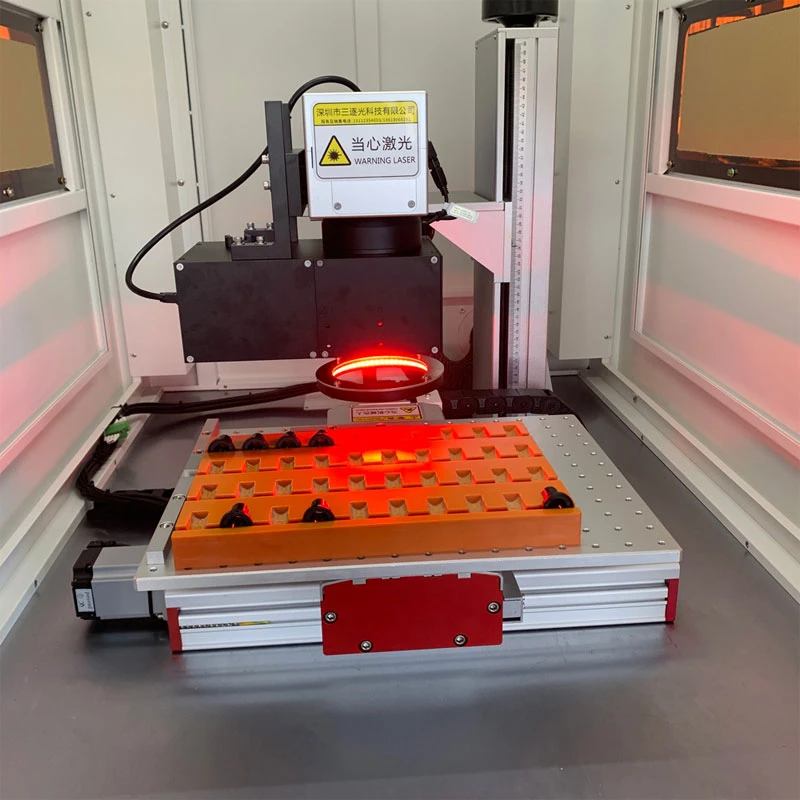
Jewelry
Gold, silver, and platinum engraving, patterns, and anti-counterfeiting codes, exquisite and seamless.
Optics and Glass
Crystal internal engraving, transparent marking on glass surfaces, lens/prism coding.
Electronics Manufacturing
Precision marking of PCB boards, IC chips, connectors, and silicone buttons.
Medical Supplies
Sterile traceability marking for syringes, catheters, and implants.
High-End Packaging
Gold foil stamping alternatives for tobacco and alcohol gift boxes and cosmetic casings, environmentally friendly and durable.
Differences From Mainstream Laser Marking
| Comparison items | Green laser marking | Fiber laser marking | UV laser marking |
|---|---|---|---|
| wavelength | 532nm (visible light) | 1064nm (infrared) | 355nm (ultraviolet) |
| Thermal effect | Low (near-cold processing) | High (easily burns edges) | Extremely low (purely cold working) |
| High-reflectivity metal adapter | Excellent (non-oxidizing) | Poor (strong reflectivity, difficult to mark) | good |
| Transparent material compatibility | excellent | Difference | good |
| cost | medium | Low | high |
Conclusion
Green laser marking fills the application gap between fiber lasers and ultraviolet lasers. With its three core advantages—precise focusing with visible light, low-heat cold processing, and wide material compatibility—it has become the preferred marking solution for highly reflective metals, transparent materials, and precision small parts.