
What is a Laser?
Lasers, a shining jewel in the field of modern technology, profoundly impact all aspects of human society with their unique optical properties and wide range of applications. From precision machining to medical surgery, from communication transmission to scientific research, lasers, with their unparalleled performance, have become a vital force driving technological progress.
Table of Contents
Laser Working Principle
The working principle of a laser is based on stimulated emission and optical amplification. Its core components include a pump source, a gain medium, and a resonant cavity. The pump source provides energy to the gain medium, causing particles within it to transition from low to high energy levels, resulting in population inversion. When the number of excited-state particles exceeds the number of ground-state particles, the gain medium possesses optical amplification capability. At this point, if a photon propagates along the axis of the resonant cavity, it will trigger stimulated emission, generating photons with the same frequency, phase, and direction as the incident photon. These photons repeatedly travel back and forth within the resonant cavity, continuously replicating themselves through stimulated emission, forming continuous optical oscillations, and ultimately emitting a high-brightness, highly directional laser beam from the partially reflecting mirror end.
Types of Laser
Classification by Gain Medium
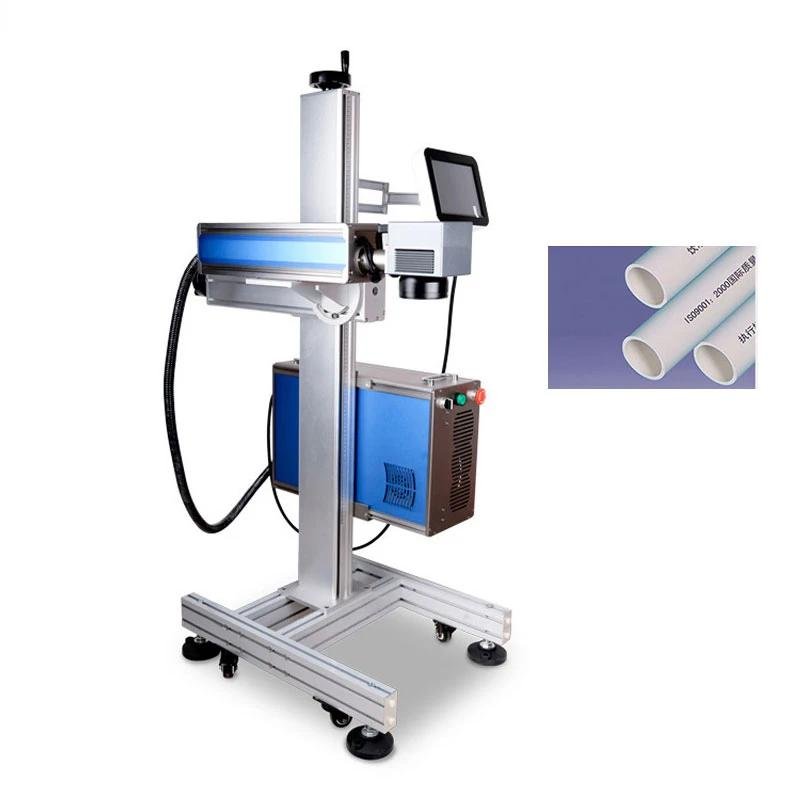
Solid-State Lasers
Using crystals or glass as the gain medium, such as ruby lasers and YAG lasers. They are characterized by high energy and compact structure, suitable for industrial cutting, medical applications, and scientific research.
Gas Lasers
Using gases as the gain medium, such as CO₂ lasers and helium-neon lasers. They are characterized by good beam quality and a wide wavelength range, widely used in industry, agriculture, medicine, and precision measurement.
Semiconductor Lasers: Using semiconductor materials as the gain medium, such as gallium arsenide lasers and gallium nitride lasers. They are characterized by high efficiency, small size, and long lifespan, and are core components in fiber optic communication, laser printing, and mobile phone sensing.
Liquid Lasers
Using organic dye solutions as the gain medium, such as dye lasers. They are characterized by continuously tunable wavelength, suitable for spectral research, photochemistry, and medical applications.
Classification by Operating Mode

Continuous Lasers
Capable of continuous laser output for extended periods, suitable for applications requiring stable laser output, such as laser welding and laser cutting.
Pulsed Lasers
These lasers output laser light in pulses, featuring high peak power and low thermal effects. They are suitable for applications requiring high energy density, such as laser marking and laser drilling.
Ultrashort Pulse Lasers
Such as picosecond and femtosecond lasers, these can generate extremely short laser pulses, offering extremely high processing precision. They are suitable for micro/nano fabrication, biomedicine, and other fields.
Application of Lasers
Industrial Processing
Laser cutting, laser welding, and laser marking technologies have become indispensable parts of modern manufacturing. They offer advantages such as high processing precision, high speed, and a small heat-affected zone, and are widely used in the automotive, electronics, and aerospace industries.
Medical Field
Laser surgery, laser therapy, and laser diagnostics have brought revolutionary changes to the medical industry. Laser surgery is characterized by minimal trauma and rapid recovery; laser therapy can precisely target diseased tissue, improving treatment outcomes; and laser diagnostics can provide high-resolution images, helping doctors to more accurately diagnose conditions.
Communications Field
Fiber optic communication is a typical application of lasers in the communications field. As an information carrier, lasers enable high-speed, high-capacity data transmission and are the foundation of modern communication networks.
Scientific Research Field
Laser plays a crucial role in scientific research fields such as quantum experiments, spectral analysis, and nonlinear optics. They provide scientists with powerful tools to explore the microscopic world of matter, driving progress in disciplines such as physics, chemistry, and biology.
Conclusion
With the continuous development of science and technology, laser technology is also constantly advancing. In the future, lasers will develop towards higher power, higher precision, and a wider wavelength range. At the same time, with the continuous emergence of new materials and technologies, the application fields of lasers will continue to expand.