
PCB Laser Drilling Process
Table of Contents
As a key component of electronic devices, the precision and efficiency of PCB manufacturing processes directly affect the performance and quality of electronic products. With the continuous miniaturization and high performance of electronic products, higher demands are being placed on PCB design and manufacturing. Among these, drilling is a crucial step in PCB manufacturing; traditional mechanical drilling is increasingly unable to meet these demanding requirements, and laser drilling, with its unique advantages, is playing an increasingly important role in PCB manufacturing.
Laser Drilling Process Principle
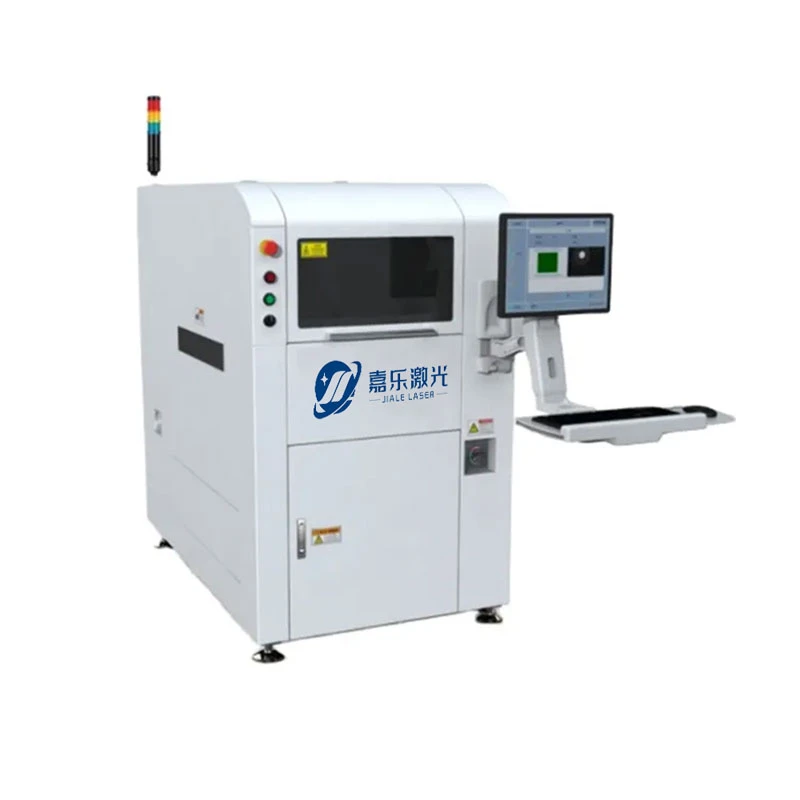
Laser drilling, also known as laser perforation, utilizes the high energy and high focusing ability of lasers. A laser generates a high-energy laser beam, which is focused onto a designated location on the PCB board using a lens system. When the high-energy laser beam irradiates the PCB board, the material at the irradiated location instantly absorbs the laser energy, causing a rapid increase in temperature. The material quickly melts or even vaporizes, thus forming a hole. This non-contact processing method avoids the mechanical stress and wear problems caused by the contact between the drill bit and the material in mechanical drilling.
The interaction between lasers and materials mainly involves two mechanisms: photothermal ablation and photochemical ablation. Photothermal ablation refers to the continuous absorption of high-energy laser light by the processed material, heating it to a molten state in a very short time. The temperature continues to rise, causing the material to vaporize and eventually evaporate, forming micropores. Photochemical ablation, on the other hand, occurs because short-wavelength laser photons have very high energy (exceeding 2 eV). These high-energy photons can break down the long molecular chains of organic materials, causing them to become particles that detach from the processed material. Under continuous external laser action, the substrate material continuously escapes, forming micropores. In actual PCB laser drilling, these two mechanisms often coexist. Which mechanism is dominant depends on factors such as the wavelength and energy of the laser and the characteristics of the material.
Advantages of Laser Drilling Technology
High Precision
Laser drilling can achieve extremely small hole diameters and extremely high hole position accuracy, typically down to tens of micrometers, with hole position deviations controlled within a very small range. Compared to traditional mechanical drilling, laser drilling has a significant advantage in precision, meeting the needs of modern PCB high-density wiring, ensuring the accuracy and stability of circuit connections, and greatly improving PCB performance and reliability.
Small Diameter Can Be Machined
With the trend towards miniaturization in electronic products, the requirements for hole diameters on PCBs are becoming increasingly smaller. Laser drilling technology can easily drill micro-holes with extremely small diameters, down to 2 mils (0.002 inches), while mechanical drilling can achieve a minimum hole diameter of approximately 6 mils (0.006 inches). This ability to process small-diameter holes enables miniaturized PCB designs, allowing electronic products to integrate more functions within a smaller space.
Non-Contact Processing
Because laser drilling is a non-contact process, it avoids physical friction and contact pressure between the drill bit and the PCB material, preventing mechanical damage to the board and effectively reducing issues such as board deformation and cracking. This is especially important for PCB materials that are relatively soft or require extremely high processing precision, significantly improving product yield.
Fast Processing Speed
While laser drilling may not have an absolute advantage over mechanical drilling in terms of processing time for a single hole, its advantages in batch processing, such as no need to change drill bits and rapid positioning, greatly improve overall processing efficiency. Furthermore, with the continuous development of laser technology, the speed of laser drilling is constantly increasing, meeting the needs of large-scale production.
High Flexibility
Laser drilling can process PCBs of various complex shapes and materials, easily handling both rigid copper-clad laminates and flexible polyimide films. Furthermore, by adjusting laser parameters such as power, pulse width, and frequency, the drilling depth and diameter can be flexibly controlled to adapt to different design requirements.
Laser Drilling Process
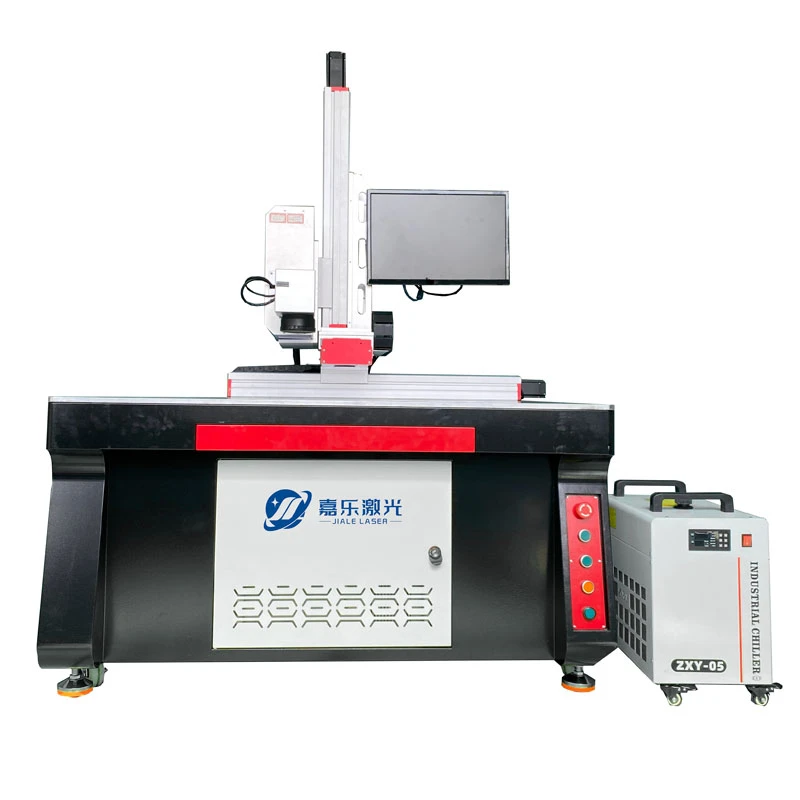
Preliminary Preparation
PCB Board Preparation: Ensure the PCB board’s material, thickness, copper foil thickness, and other parameters meet design requirements. Clean the PCB board surface to remove oil, dust, and other impurities to ensure effective laser interaction.
Equipment Debugging: Debug the laser drilling equipment according to the PCB board parameters and drilling requirements, setting appropriate laser power, pulse width, frequency, drilling speed, focal length, and other parameters. Simultaneously, check the equipment’s optical path system, cooling system, and control system for proper operation.
Drilling Process
Positioning: Using the equipment’s positioning system, accurately place the PCB board on the worktable and determine the drilling positions according to design requirements. Modern laser drilling equipment is typically equipped with a high-precision vision positioning system, capable of quickly and accurately identifying marker points on the PCB board, achieving automatic positioning, and improving drilling accuracy.
Drilling: Start the laser; the laser beam drills holes in the PCB board according to preset parameters and paths. During the drilling process, depending on different process requirements, single-pass drilling or multiple-pass drilling methods can be used. For deeper holes or holes requiring high wall quality, multiple drilling operations may be necessary, with each drilling attempt gradually increasing the depth to ensure hole quality.
Post-processing
Cleaning: After drilling, molten material residue and debris may remain on the PCB surface and inside the holes, requiring cleaning. Methods such as ultrasonic cleaning and chemical cleaning are commonly used. The PCB is immersed in a cleaning solution, and the residue and debris are removed through ultrasonic vibration or chemical reagents, ensuring cleanliness inside the holes.
Inspection: A comprehensive inspection of the drilled PCB is performed, including hole diameter, hole position accuracy, and hole wall quality. Common inspection methods include microscopic inspection, scanning electron microscopy, and automated optical inspection. Inspection allows for the timely detection of problems during drilling, such as hole diameter deviation, hole position misalignment, hole wall roughness, and residue, enabling appropriate adjustments and improvements.
Hole Deposition Treatment: For holes requiring electrical connections, a hole deposition treatment is necessary. This involves depositing a layer of metal, such as copper, on the hole wall to make the hole conductive. Hole plating typically involves chemical copper plating or electroplating. First, chemical copper plating is performed on the hole walls to form a thin conductive layer. Then, electroplating is used to further thicken the copper layer to meet electrical performance requirements.
Conclusion
With the rapid iteration of emerging technologies such as 5G communication, artificial intelligence, and autonomous driving, the demand for high-density, high-precision interconnects in the PCB industry will continue to rise, and laser drilling technology will usher in broader development prospects. In the future, through deep integration with technologies such as AI intelligent control systems, multi-laser source composite processing, and online real-time detection, laser drilling will further break through the boundaries of precision, efficiency, and cost, providing core manufacturing support for creating thinner, lighter, smarter, and more reliable electronic devices.