
Laser Cleaning: Wide Applications In Various Fields
Mold Cleaning
Laser cleaning enables non-contact cleaning of molds, ensuring safety and maintaining precision. It can remove submicron-sized contaminants that traditional methods cannot, achieving truly pollution-free, efficient, and high-quality cleaning.
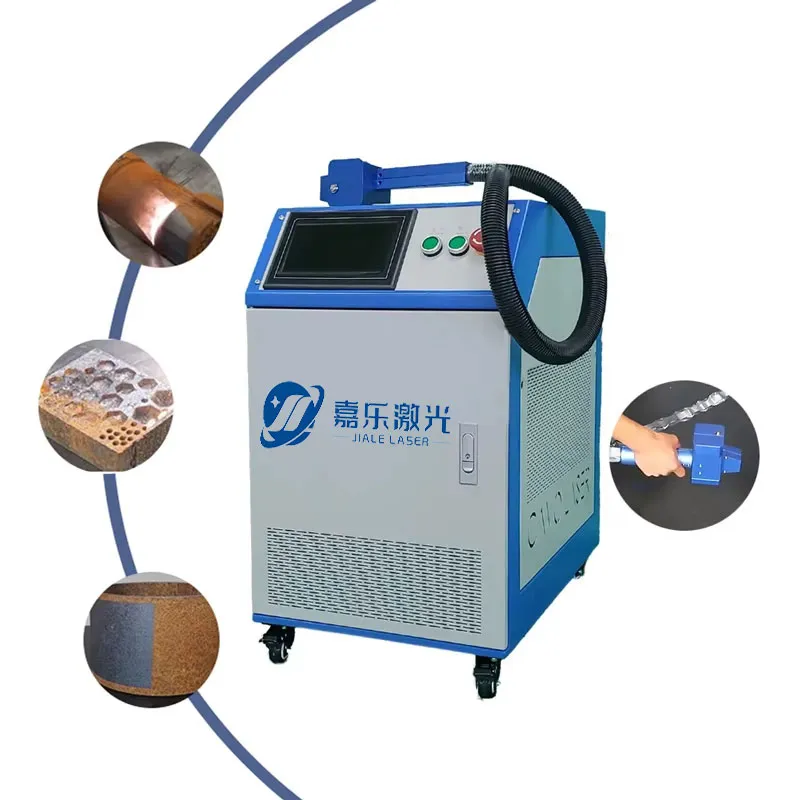
Precise Degreasing Cleaning in the Precision Instrument Industry
The precision machinery industry often requires the removal of esters and mineral oils used for lubrication and corrosion protection from parts, typically using chemical methods. However, chemical cleaning often leaves residues. Laser degreasing can completely remove esters and mineral oils without damaging the part surface. The laser causes the thin layer of oxides on the part surface to explode and vaporize, creating a shock wave that removes the contaminants, rather than through mechanical interaction.
Rail Cleaning
Currently, pre-welding cleaning of rails entirely relies on grinding wheels and belts, resulting in severe damage to the substrate, significant residual stress, and high annual consumption of grinding wheel consumables, leading to high costs and serious dust pollution. Laser cleaning can provide a high-quality, efficient, and green cleaning technology for high-speed railway track laying in my country, solving the aforementioned problems, eliminating welding defects such as holes and ash spots in seamless rails, and improving the stability and safety of my country’s high-speed railway operation.
Aerospace Industry
Aircraft surfaces require repainting after a certain period, but the old paint must be completely removed before repainting. Chemical soaking/wiping is the main paint removal method in the aerospace industry. This method generates a large amount of chemical waste and cannot achieve localized paint removal for maintenance. This process is labor-intensive and harmful to health. Laser cleaning can achieve high-quality removal of paint from aircraft skin surfaces and is easily automated. Currently, this technology has begun to be applied to the maintenance of some high-end aircraft models abroad.
Marine Industry
Currently, pre-production cleaning of ships mainly uses sandblasting. Sandblasting causes serious dust pollution to the surrounding environment and has been gradually banned, leading to reduced or even stopped production in shipbuilding companies. Laser cleaning technology will provide a green and pollution-free cleaning solution for anti-corrosion coating of ship surfaces.
Military Industry
Laser cleaning technology is widely used in weapon maintenance. Laser cleaning systems can efficiently and quickly remove rust and contaminants, and can be selectively applied to specific areas, automating the cleaning process. Laser cleaning not only achieves a higher level of cleanliness than chemical cleaning processes but also causes virtually no damage to the surface of objects.
Many of the aforementioned fields are pillar industries of the national economy. The economic and social benefits of incorporating laser cleaning technology into these sectors are considerable. Developing and commercializing supporting laser cleaning equipment using my country’s existing laser technology resources is entirely possible, and it is also of great significance for promoting the development of high-tech industries.