
Laser Cleaning Machines Aid in Material Surface Treatment
In the field of material surface treatment, laser cleaning machines are becoming a powerful force driving the industry towards higher efficiency and environmental friendliness due to their unique advantages.
Limitations of Traditional Material Surface Treatment Methods
In the past, common material surface treatment methods such as chemical cleaning and mechanical polishing had many insurmountable problems.
Chemical cleaning often generates large amounts of wastewater and toxic chemicals, causing serious environmental pollution and potentially posing a threat to the health of operators.
Mechanical polishing is not only inefficient but also easily damages the material surface, affecting its performance and quality.
Innovative Principles and Unique Advantages of Laser Cleaning Machines
Non-contact Cleaning
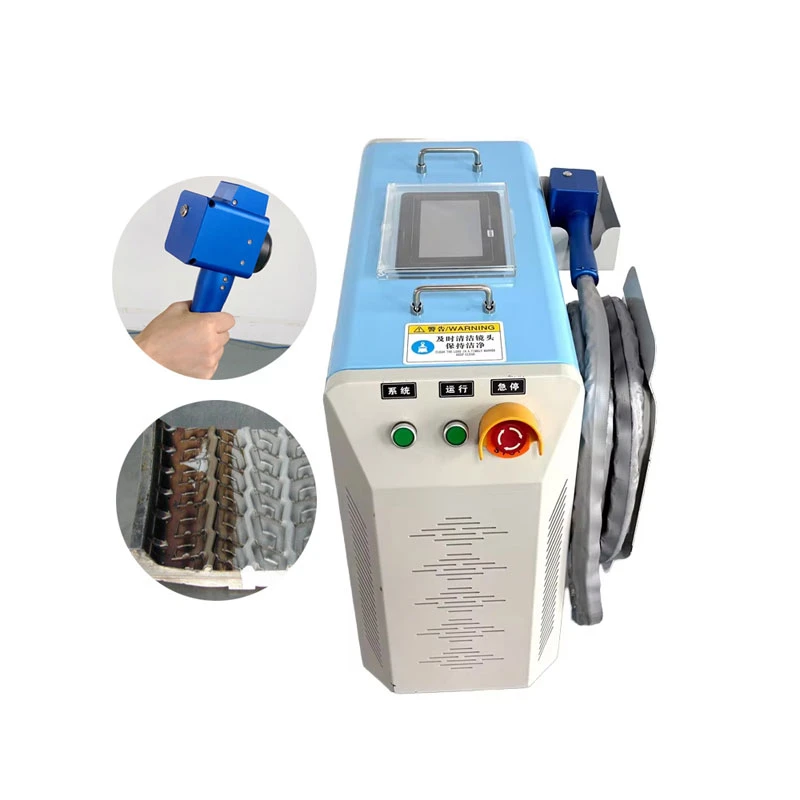
Laser cleaning machines emit high-energy-density laser beams that irradiate the material surface, causing contaminants to evaporate or peel off instantly, achieving non-contact cleaning. This method avoids mechanical friction and damage to the material surface, maximizing the protection of the material’s integrity.
Precise and Controllable
Laser cleaning machines can precisely control parameters such as laser energy, pulse width, and scanning speed, thereby achieving customized cleaning effects for different materials and contaminants. Whether removing tiny dirt particles or large areas of rust, laser cleaning achieves precise operation.
Highly Efficient and Fast
Compared to traditional methods, laser cleaning significantly increases speed. It can complete large-area surface treatments in a short time, greatly improving production efficiency and reducing production cycles.
Green and Environmentally Friendly
The entire cleaning process does not use chemical reagents and produces no wastewater, exhaust gas, or other pollutants, making it a truly green and environmentally friendly cleaning technology.
Excellent Performance in Surface Treatment of Various Materials
Metallic Materials
Effectively removes rust, oxide layers, oil stains, and other contaminants from metal surfaces, restoring their luster and performance. It has wide applications in industries such as automotive manufacturing, ship repair, and steel processing.
For example, in the refurbishment of automotive parts, laser cleaning can quickly remove surface paint and rust, preparing the surface for subsequent painting and remanufacturing.
Non-Metallic Materials
For non-metallic materials such as plastics, glass, and ceramics, laser cleaning can remove surface stains, coatings, and impurities without altering the original properties and structure of the material.
In the electronics industry, laser cleaning can precisely remove flux and contaminants from circuit boards, improving product reliability.
Comprehensive Upgrades to Industrial Production
Improved Product Quality
Laser cleaning achieves clean, smooth, and contamination-free material surfaces, providing a solid foundation for subsequent processing steps such as coating, welding, and bonding, thereby improving the overall quality and performance of products.
Reduced Costs
It reduces the procurement and disposal costs of chemical reagents, and lowers investment in wastewater treatment and environmental protection equipment. Simultaneously, the efficient cleaning process reduces labor and time costs.
Enhanced Sustainable Development Capabilities
It meets the environmental and sustainable development requirements of modern industry, helping companies improve their social image and comply with increasingly stringent environmental regulations.
Conclusion
With its high efficiency and environmental friendliness, laser cleaning machines have brought revolutionary changes to material surface treatment. In the future, it will continue to play a vital role, driving various industries towards cleaner, more efficient, and higher-quality development.