
How to Mark on Laser Equipment (4 Steps)
Table of Contents
Laser marking allows you to apply it to numerous industries. From pipe marking to electronics—customized laser marking makes it versatile and suitable for almost any sector.
But how exactly does laser marking work? Well, that’s exactly what you’re going to learn.
From material selection, fixing, and cleaning, parameter settings, marking execution, to various laser marking techniques.
Let’s explore every step of the laser marking process together.
Why Use Laser Marking?
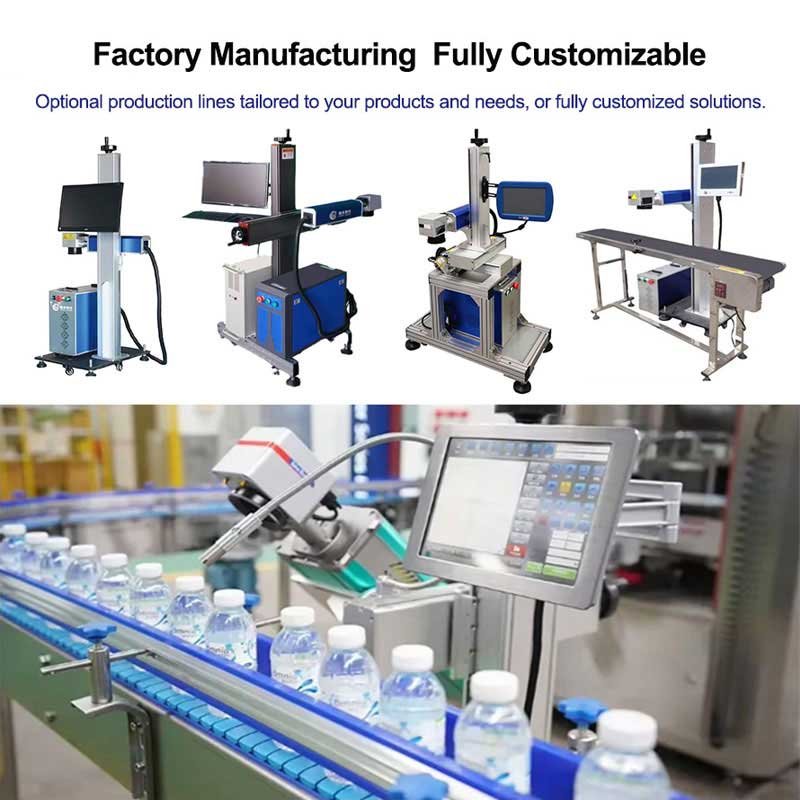
Laser marking enables non-contact, high-precision, and permanent marking, and is environmentally friendly, efficient, and suitable for a variety of materials.
Key Steps In Laser Marking Process
The key steps of laser marking process mainly include four core links: equipment preparation, parameter setting, marking execution, and quality inspection, to ensure that the marking is clear, accurate, and meets production requirements.
Step 1:Equipment Preparation and Calibration
Power Supply and Environmental Check: Confirm that the laser marking machine’s power supply is stable and the voltage meets equipment requirements (usually 220V±10%). Ensure the working environment is well-ventilated and avoids smoke accumulation.
Optical Path Calibration and Leveling Adjustment: Use calibration paper to check if the laser spot is centered. Adjust the reflector if necessary. Adjust the worktable using a level to ensure the marking surface is level and prevent pattern distortion.
Material Fixation and Cleaning: Securely fix the material to be marked onto the worktable. Use a lint-free cloth and alcohol to remove surface oil and dust to ensure effective marking adhesion.
Step 2:Parameter Settings and Optimization
Setting Key Parameters Based on Material Type
Metal Materials: Recommended frequency 20–50kHz, power 70–80% to avoid unclear markings due to insufficient energy.
Plastic Products: Use a low frequency of 10–30kHz to prevent localized carbonization or melting edges.
Defocus Control: Adjusting the defocus by ±2mm changes the marking depth, suitable for different depth requirements.
Fine Adjustment of Galvanometer Parameters
Marking Speed: Must match the laser frequency; excessive speed will lead to increased dot spacing and blurred lines.
Jump Speed and Delay: Proper settings can prevent connected strokes or scattered starting points, improving overall aesthetics.
Inflection Point Delay: Prevents arcs or ghosting at turns, ensuring graphic accuracy.
Test Printing and Parameter Fine-tuning: Conduct test printing in corner areas, observe marking contrast and edge sharpness, and fine-tune parameters such as power and speed based on actual results.
Step 3:Marking Execution Process
Import Design Files
Design patterns or QR codes using software such as AutoCAD or CorelDRAW, save them as PLT, DXF, or other formats, and import them into the marking control software.
Start Automatic Marking
After the software loads the path, start the program. The laser beam automatically scans along the set trajectory to complete the graphic marking.
Real-time Monitoring and Anomaly Handling
During the marking process, carefully observe for issues such as offset or broken lines. If any anomalies are detected, immediately pause the process and investigate the cause.
Step 4:Quality Inspection and Post-Processing
Visual Inspection: Use a magnifying glass or microscope to inspect the markings for completeness, clarity, and the absence of burrs, blurriness, or omissions.
Dimension and Position Verification: Measure the actual dimensions of the markings to ensure they match the design and are accurately positioned without deviation.
Durability Testing: Conduct friction, weathering, or chemical wiping tests to verify the stability of the markings during long-term use.
Cleaning and Packaging: Remove surface residues and package the finished product in dustproof packaging to prevent damage to the markings during transportation.
Applications of Laser Marking
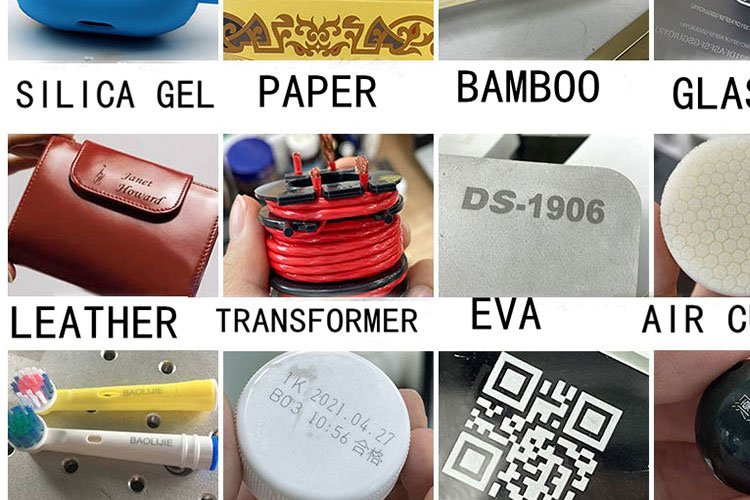
Electronics and Electrical Appliances
Serial numbers, QR codes, or brand logos are marked on precision components such as integrated circuits (ICs), mobile phone casings, circuit boards, and chips. The characters can be as small as micrometers to ensure anti-counterfeiting and traceability.
Medical Devices and Pharmaceuticals
Labeling for devices or packaging such as bone screws, pacemakers, reagent cartridges, and medicine bottles meets FDA-approved Direct Part Marking (DPM) requirements, ensuring the marking is corrosion-resistant, non-contaminating, and does not damage tissue, while supporting the UDI traceability system.
UV laser “cold processing” technology can achieve heat-free marking on soft capsules and polymer materials, avoiding the risk of bacterial growth.
Automobile Manufacturing
It can be used for marking engine parts, bearings, airbag components, dashboard buttons, etc., to achieve production batch tracking and quality control. It supports 360° cylindrical surface marking, such as irregularly shaped parts like pens and bearings.
Food and Pharmaceutical Packaging
Marking production dates, shelf life, batch numbers, and QR codes on PVC pipes, beverage bottles, aluminum foil seals, and packaging films, combined with high-speed flying marking on assembly lines, improves automation efficiency.
Hardware tools and building materials
Brand identification and serial number markings are applied to cutting tools, measuring tools, molds, door and window accessories, and building material pipes. The markings are wear-resistant and high-temperature resistant, and will not fall off after long-term use.
Jewelry and handicrafts
Engraving intricate patterns or personalized text on gold and silver jewelry, watches, and eyeglass frames is a non-contact process that avoids scratching valuable surfaces and enhances added value.
Why Choose Jiale Laser Marking Equipment?
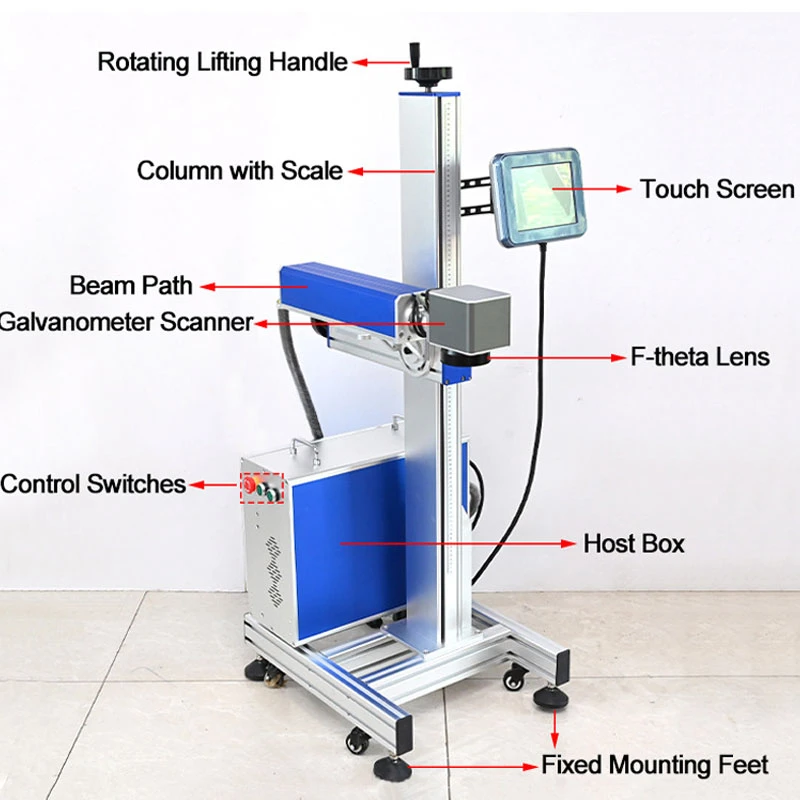
Jialelaser laser marking equipment is widely popular due to its stable and reliable operation, strong technical adaptability, high environmental adaptability, and ability to meet the needs of precision manufacturing. We offer a variety of laser marking equipment options and can employ a variety of laser marking processes.
Each laser marking machine is customized to your unique requirements and specifications—get a quote now.
FAQs
What materials are suitable for laser marking?
Laser marking is compatible with a variety of materials, with specific compatibility depending on the laser type:
Fiber laser marking machine: Suitable for metals such as stainless steel, aluminum, and copper, as well as some hard plastics.
CO₂ laser marking machine: Suitable for non-metallic materials such as glass, ceramics, paper, PVC, and wood.
UV laser marking machine: Used for heat-sensitive materials such as polymer materials, flexible circuit boards, and pharmaceutical packaging, achieving non-destructive marking.
How to solve the problem of unclear or faded markings?
Adjust the focus to the optimal plane (error ≤ 1mm);
Clean the protective lens and galvanometer (using anhydrous ethanol + lint-free paper);
Check the laser power setting, and replace the aging krypton lamp or laser tube if necessary.
What are the core advantages of laser marking?
Non-contact processing: No mechanical pressure, protecting workpiece integrity.
Permanent and durable: Markings are wear-resistant, high-temperature resistant, tamper-proof, and support full lifecycle traceability.
High precision and high speed: Enables micron-level fine engraving; a single mark is completed in milliseconds.
Environmentally friendly and consumable-free: No ink or solvents required, meeting green manufacturing standards.
High degree of automation integration: Supports flying marking, vision guidance, and MES system integration, improving production line efficiency.