
How do you distinguish between the application scenarios for portable handheld laser cleaning and pulsed laser cleaning?
Many professionals in the manufacturing sector often confuse these two concepts: portable handheld laser cleaning and pulsed laser cleaning. It is a common misconception that they are mutually exclusive categories; in reality, they belong to different classification dimensions. To put it simply: “pulsed” refers to the laser’s emission mode (the type of light source), while “handheld” refers to the equipment’s operational form. Handheld units can utilize either pulsed or continuous-wave (CW) lasers, while pulsed laser sources can be configured as portable handheld units, fixed benchtop systems, or integrated into automated workstations. Understanding this fundamental logic is essential to avoid selecting the wrong equipment or encountering process-related pitfalls.
Let’s break down each concept.
Pulsed laser cleaning is defined by how the light source operates. It utilizes short, nanosecond-duration pulses with high peak power to deliver instantaneous energy impacts that strip away contaminants. Because heat is rapidly dissipated during the intervals between pulses, this process is considered a “cold cleaning” method characterized by low heat input. Its primary advantages include a minimal heat-affected zone (HAZ), protection of the substrate, and a reduced risk of tempering colors or secondary oxidation—making it ideal for applications that demand high levels of substrate integrity.
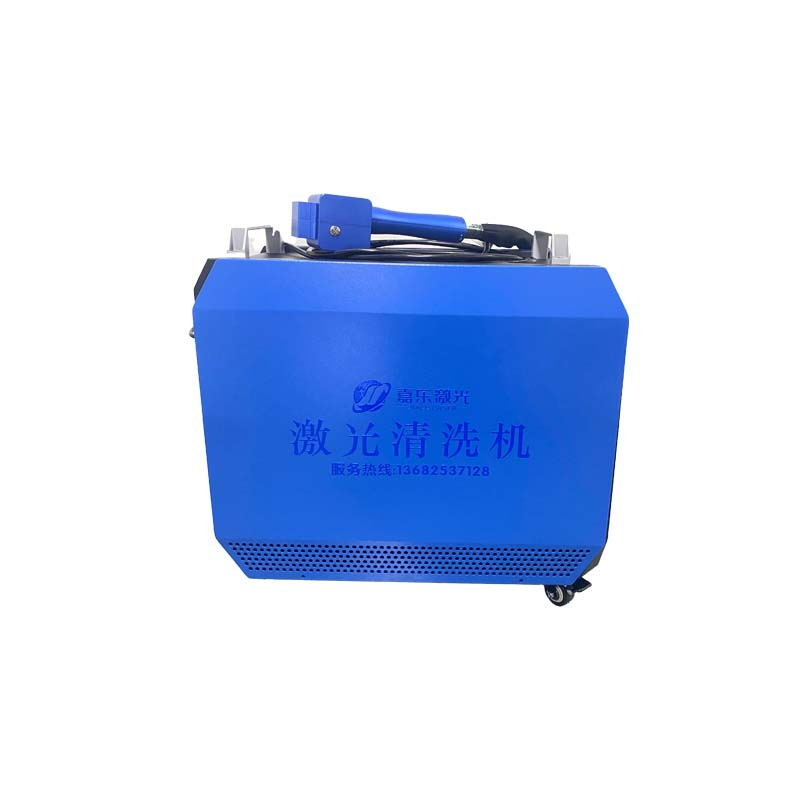
Portable handheld laser cleaning, by contrast, is defined by the equipment’s structure and operation. It consists of a main unit connected to a handheld cleaning gun via a flexible conduit, allowing the operator to move the gun freely across the workpiece surface without needing to fix the workpiece in place. The key attributes here are flexibility and mobility; the process is not constrained by the size or positioning of the workpiece. However, its limitations include lower stability during prolonged, continuous operation and a reduced capacity for integration into automated production lines.
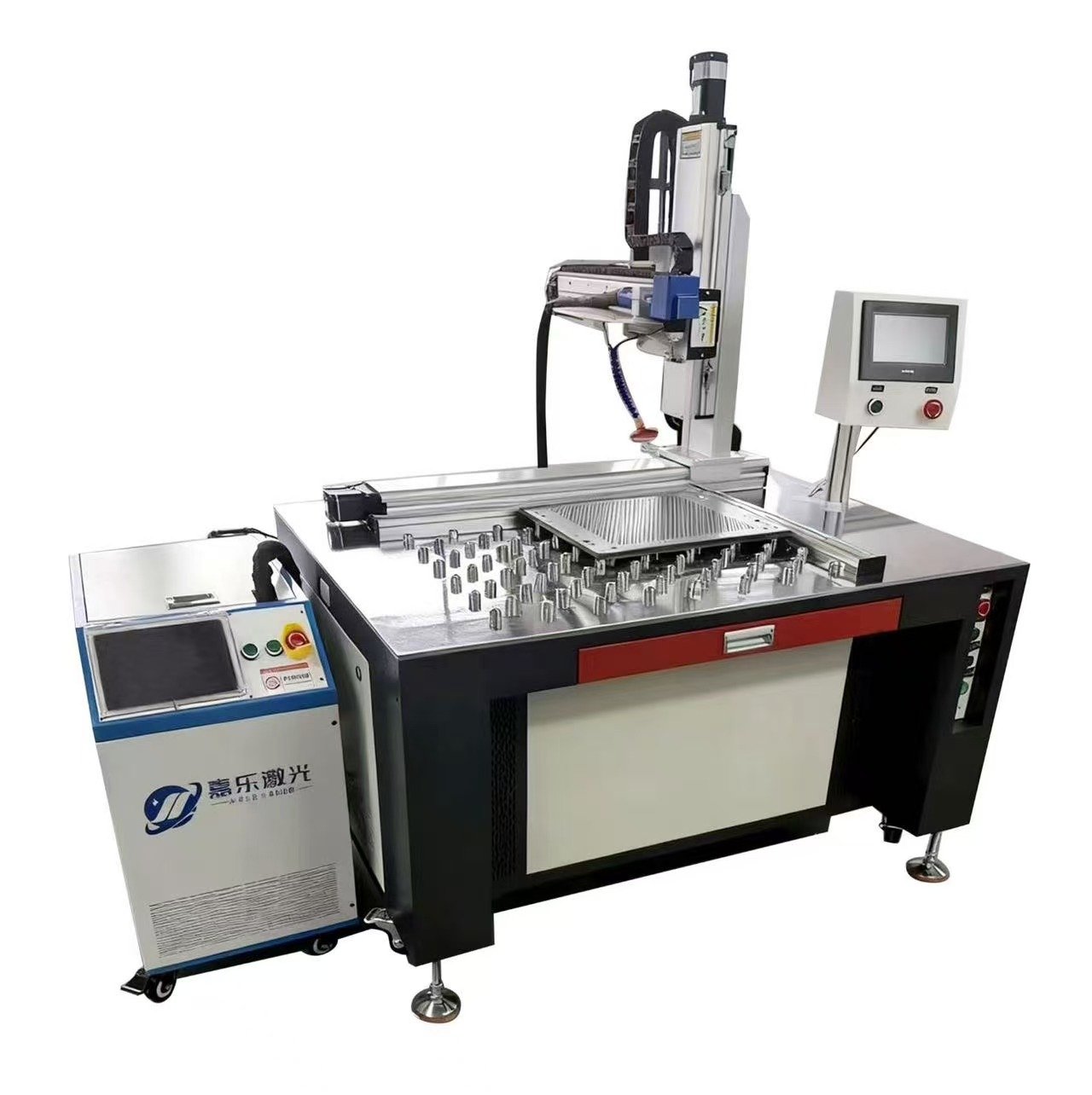
With these definitions clarified, let’s compare their typical application scenarios and examine the various configurations: pulsed handheld, continuous-wave (CW) handheld, and fixed (non-handheld) pulsed systems.
I. Core Application Scenarios for Pulsed Laser Cleaning (Regardless of whether it is handheld or benchtop)
The primary use case for pulsed laser sources involves scenarios where the substrate must remain undamaged and the cleaned part will undergo subsequent processing.
- Precision Molds: Cleaning carbon deposits, oil, and oxide layers from injection molds, die-casting molds, and tire-manufacturing molds. The process must not cause annealing or the formation of craters (melt pits), and the original hardness and surface finish of the mold must be maintained.
- Pre-welding preparation: For stainless steel, aluminum alloys, and copper components, oxide films must be removed. After cleaning, the surface should show no signs of bluing or blackening; this ensures proper weld bead formation and minimizes porosity defects.
- Pre-treatment for coating, electroplating, or bonding: Removing surface oxidation and loose rust enhances coating adhesion without altering the original dimensions of the substrate.
- Precision components, heat-treated parts, and thin-walled or sheet-metal components: This includes automotive parts, small aerospace components, and thin stainless steel sheets—workpieces sensitive to deformation, tempering, or a loss of hardness.
- Rust and oxide removal for cultural relics, precision tooling, and heat-sensitive non-ferrous metals (such as copper and aluminum).
Drawbacks of pulsed laser sources: At the same power level, they are less efficient than continuous-wave (CW) lasers when removing thick, heavy rust or large, stubborn patches of scale. Additionally, equipment with equivalent power typically carries a higher procurement cost.
Pulsed laser systems can be configured as portable, handheld units (for flexible, on-site cleaning of large objects) or integrated into fixed frames with robotic arms for automated, batch-processing workflows.
II. Core Application Scenarios for Handheld Laser Cleaning (Including Pulsed and Continuous-Wave Systems)
Handheld systems are primarily intended for scenarios where workpieces are too large or difficult to move, cannot be placed on an assembly line or in a fixture, and require on-site or field-based processing.
- Large steel structures, heavy frames, pressure vessels, and large tanks: These components can weigh several to dozens of tons. Given the prohibitive costs of lifting, transporting, and clamping such items, handheld laser cleaning is the only viable solution for removing rust or old paint directly on-site.
- Field maintenance and emergency repairs: This includes power plant equipment, construction machinery, mining equipment, and ship decks or structural components, where rust and paint removal must be performed during on-site maintenance or downtime.
- Irregular, scattered, or non-uniform workpieces: When dealing with a collection of items that vary in size and shape, frequent retooling or fixture adjustment is impractical; a handheld laser offers the flexibility to clean these objects efficiently. 4. Cross-area operations at construction sites or workshops: For scenarios involving decentralized processing across multiple workstations, a mobile, wheeled unit can be moved around and used in various areas.
⚠️ Important Note: Handheld laser cleaning machines come in two versions—always check the light source when selecting a model!
Pulsed Handheld Laser Cleaner: Offers both “high mobility” and “low heat input” (preventing damage to the substrate). It is ideal for large molds, massive stainless steel components, and on-site oxide removal prior to welding. This is the preferred choice for high-end, on-site maintenance and repair.
Continuous-Wave (CW) Handheld Laser Cleaner: Highly efficient and more affordable, but it generates significant heat. This can easily damage the substrate, cause blackening, or lead to secondary oxidation. It is suitable only for removing thick rust or heavy paint layers from general steel structures where substrate precision is not a concern.
Limitations of the handheld form factor: Because it is operated manually, the uniformity of the cleaning depends on the operator’s skill level. It is not well-suited for large-batch, standardized parts, nor is it easily integrated into automated production lines; furthermore, long-term, high-volume manual operation entails high labor costs.
III. Summary by Application Scenario
✅ Choose [Pulsed Laser (Automated/Benchtop)]: For small-to-medium, consistent-batch parts on an automated production line; for pre-welding or pre-coating preparation of precision components; or for batch cleaning of molds—where high consistency and yield rates are required.
✅ Choose [Pulsed Handheld Laser]: For massive, immovable components that require precision handling (where the substrate must not be damaged or overheated)—such as on-site oxide removal for large molds or large aluminum alloy/stainless steel structures.
✅ Choose [Continuous-Wave (CW) Handheld Laser]: For large, general carbon steel structures where the goal is simply to remove thick rust or old paint, and where preserving the original properties of the substrate or avoiding heat-induced discoloration is not a priority.
❌ Not Recommended: Using a CW handheld laser on precision molds, aluminum alloy parts (pre-welding), or heat-treated components—even if done for the sake of convenience—is highly likely to result in the workpiece being scrapped.
IV. Avoiding Common Pitfalls in Selection
Many salespeople may equate “handheld laser cleaner” with “pulsed laser cleaner”—this is a very common misconception.
“Handheld” refers to the form factor, while “pulsed” refers to the light source. These are not mutually exclusive alternatives; rather, they are two distinct, independent parameters. If your application involves precision oxide removal or mold cleaning, prioritize a pulsed laser source. Then, based on the size of the workpiece, decide whether to use an automated, stationary system or a handheld pulsed unit.
If, however, you are performing tasks like on-site rust or paint removal from steel structures—where workpieces are bulky and there are no strict precision requirements for the substrate—then consider a handheld continuous-wave (CW) laser system.
The criteria for selection are straightforward:
Can the workpiece be placed on an assembly line? This determines whether you need a handheld system.
Is the workpiece sensitive to high-temperature damage (such as thermal burns, deformation, or secondary oxidation)? This determines whether you need a pulsed laser.