
How do you determine if a laser cleaning machine is suitable for your mold?
Molds vary significantly in terms of material, structure, and the types of contaminants present; higher power does not necessarily equate to better cleaning results. When selecting a laser cleaning machine, it is more important to match the equipment to the mold’s specific processing requirements.
- First, identify the mold material
Common mold types—such as injection molds, rubber molds, tire molds, die-casting molds, and precision metal molds—have varying tolerances for laser energy.
Laser cleaning is generally well-suited for metal materials like stainless steel and mold steel. However, for molds featuring fine surface textures, coatings, or special surface treatments, sample testing is required to determine the appropriate laser type and parameters.
- Consider the contaminants to be removed
After prolonged use, molds may accumulate:
Mold release agent residues
Oil and grease
Rubber or plastic residues
Carbon deposits and carbides
Rust spots and oxide layers
Certain surface coatings
Different contaminants absorb laser energy differently, requiring adjustments to parameters such as power, frequency, and scanning speed.
- Is the mold structure complex?
If the mold features fine textures, deep grooves, channels, holes, or complex curved surfaces, cleaning precision becomes critical.
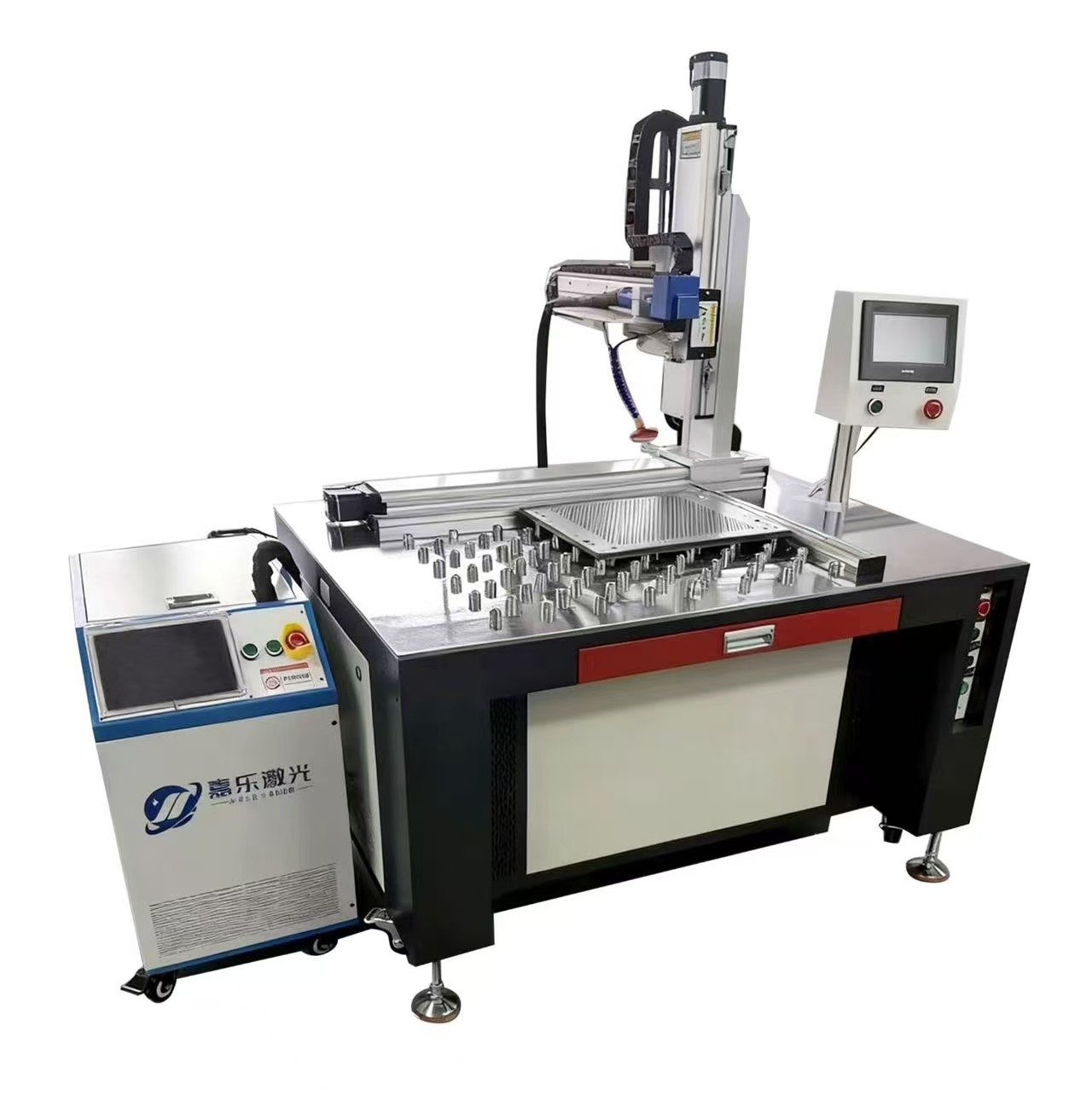
Handheld laser cleaning machines are suitable for flexibly treating specific areas; for molds with fixed positions and repetitive cleaning needs, 3-axis or 6-axis automated laser cleaning systems can be considered to ensure consistent results.
- Select power based on the cleaning area
High-power equipment is not necessarily required for molds with small surface areas or intricate structures.
For instance, a pulsed laser system with around 100W of power can handle some precision cleaning on small areas; a 200W system offers a balance between cleaning efficiency and precision requirements; for applications involving heavy contamination or large surface areas, higher-power equipment should be considered.
Specific power requirements should be determined through testing based on mold material, contaminant thickness, and cleaning objectives, rather than relying solely on the power rating.
- Consider mold precision and surface texture
For high-value molds, removing contaminants is only the first step; it is equally important to avoid any unnecessary impact on the mold substrate, surface texture, or dimensional accuracy. Therefore, before full-scale production, it is advisable to conduct small-scale sample tests to observe the condition of the cleaned surface before finalizing the laser type, power output, and scanning parameters.
- Handheld or Automated?
Handheld equipment generally offers greater flexibility if there is a wide variety of mold specifications or if the cleaning locations vary significantly.
If the mold models are standardized and the cleaning areas are repetitive—and if you wish to enhance processing consistency—you might consider 3-axis or 6-axis automated laser cleaning systems.
Conclusion
Determining whether a laser cleaning machine is suitable for your molds requires looking beyond just the wattage; you must also comprehensively consider factors such as mold material, the type of contaminants, structural complexity, cleaning area, surface precision requirements, and automation needs.
If you are unsure whether to choose a 100W, 200W, 300W, or higher-power unit, you can provide details—such as photos of the molds, materials, contaminant types, and cleaning requirements—to determine the most appropriate laser cleaning solution through sample testing.