
Application of Laser Cladding Technology In Mold Repair
Molds play a crucial role in casting and plastic molding processes. Their manufacturing process is complex, with long production cycles and high processing costs. Therefore, repairing and reusing failed molds undoubtedly offers significant economic benefits. The lifespan of a mold depends on its ability to resist wear and mechanical damage. Once excessively worn or mechanically damaged, it must be repaired before it can be used again.
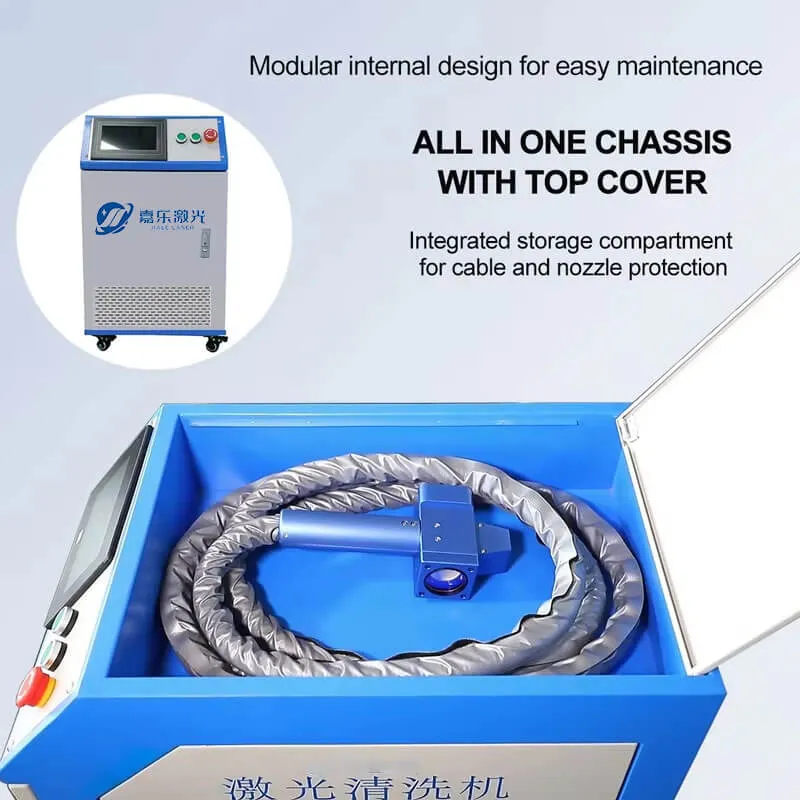
Laser cladding technology is an emerging surface treatment technology of the 21st century. Its basic principle is to grind the damaged surface of a workpiece using an abrasive tool, and then uniformly place metal powder into the pits on the surface of the workpiece. A high-energy-density laser beam is then used to clad the alloy material onto the base surface, resulting in an alloy layer with a completely different composition and properties from the base material. The coating material forms a complete metallurgical bond with the substrate surface, and it is mainly used in molds, gears, bearings, wheel hubs, engines, chemical and metallurgical fields. Laser processing technology also includes laser hardening and laser strengthening techniques. Its successful development has greatly improved the service life of molds and hardware parts, and also improved product quality.
The basic process flow and precautions for applying laser cladding technology in the mold industry are as follows:
- Mold surface inspection and repair plan confirmation: Inspect the mold for cracks, scratches, pitting, and whether the area requiring treatment is a flat surface or a rounded corner. Determine the repair plan for different problems and perform appropriate grinding on the areas requiring treatment.
- Mold surface oil cleaning: Clean with cleaning solution to remove scale, oil stains, grease, paint, etc., improving the surface coating effect.
- Selecting appropriate coating and process parameters based on hardness requirements: Select appropriate power, focal length, spot size, and coating (e.g., iron powder for cast iron) according to the maintenance plan and customer requirements.
- Laser cladding repair: The coating is evenly spread by the equipment. A laser beam is emitted from the laser, and the laser beam is refracted by an internal lens onto the processed surface, forming a complete metallographic bond between the coating and the base material surface.
- Post-treatment mold surface repair: A fitter grinds and polishes the composite surface to ensure that the mold gap and surface roughness meet the requirements.
- Pre-shipment inspection: Check whether the hardness and surface roughness after treatment meet the customer’s requirements. If they do not meet the requirements, the treatment must be redone.
The method of repairing mold surface wear using laser cladding technology can be summarized as follows: A high-power laser beam with constant power P and a hot powder stream are simultaneously incident on the mold surface. Part of the incident light is reflected, and part is absorbed. When the energy absorbed instantaneously exceeds a critical value, the metal melts to form a molten pool, which then rapidly solidifies to form a metallurgical bonding coating. The laser beam scans back and forth along the route given by the CAD secondary development application, repairing the mold row by row and layer by layer. In particular, the repaired mold requires almost no further processing.