
Focused on Precision and Non-Destructive Cleaning: Handheld Pulsed Laser Cleaning Machines and Their Ideal Applications
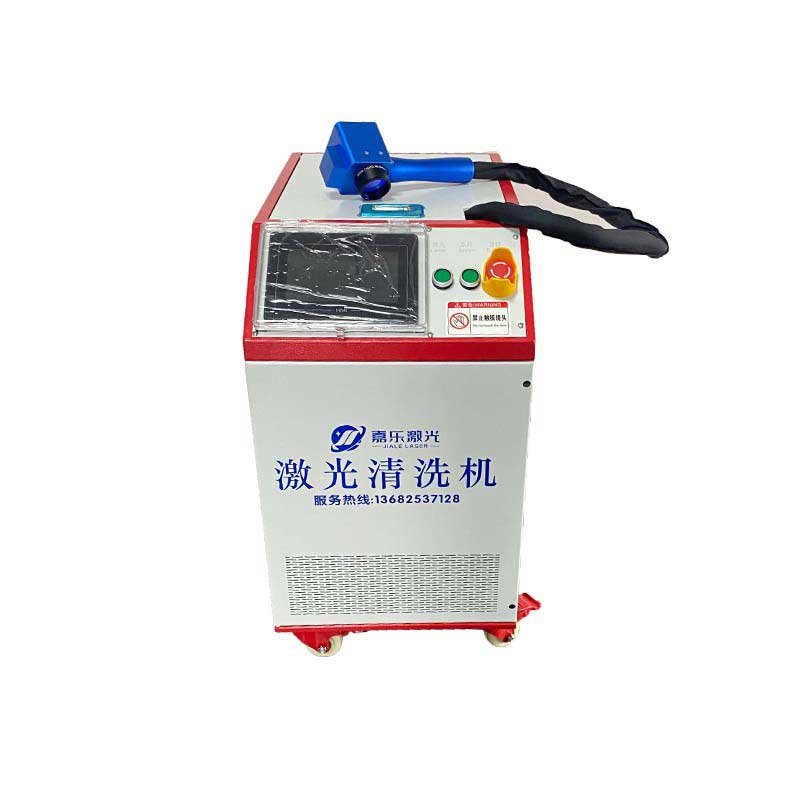
Many people struggle to distinguish between pulsed laser cleaning and continuous-wave (CW) laser cleaning. Simply put, a pulsed laser releases high energy in short, instantaneous bursts. This results in minimal thermal impact—approaching a “cold cleaning” process—which prevents the substrate from scorching (turning black) or deforming. When paired with a handheld cleaning head, it offers flexible operation, making it the premier choice for precise, localized, and non-destructive cleaning of high-value components—especially where strict surface quality standards are required.
While not designed for high-speed, large-scale removal of thick rust layers, its core strengths lie in its controllability, gentleness, and ability to clean without damaging the underlying material. Below are the primary applications for which it is best suited:
I. In-Situ Cleaning of Precision Molds (A Key Application for Pulsed Laser Systems)
After prolonged use, the cavities of injection, rubber, die-casting, tire, and silicone molds often accumulate carbon deposits, plastic residues, rubber, and mold-release agent buildup.
Traditional methods—such as ultrasonic immersion or sandblasting—can easily damage the mirror finish, etched patterns, or textured surfaces of a mold, leading to defects in the final product. Furthermore, these methods often require the mold to be disassembled and transported, resulting in significant downtime.
A handheld pulsed laser allows for in-situ cleaning right next to the production machine, eliminating the need for disassembly. Because the pulse energy is precisely controlled, the laser removes only the contaminants without altering the mold’s original texture or dimensional accuracy. Once cleaned, the mold can be immediately tested and put back into production—a workflow frequently used by mold manufacturers and maintenance providers.
II. New Energy Industry: Pre-Weld Preparation and Post-Weld Precision Oxide Removal
In the production of power batteries, energy storage packs, battery trays, copper busbars, aluminum busbars, and CCS (Cell Contact System) components, welding quality depends heavily on extreme surface cleanliness.
Aluminum and copper are prone to discoloration when exposed to heat; continuous-wave lasers can easily cause the substrate to oxidize and turn black, which negatively impacts weld strength and sealing integrity. Handheld pulsed laser cleaning is used for the localized removal of oxide films, oil stains, coating residues, and post-welding soot from aluminum components. It features low heat input, which prevents discoloration of the substrate and ensures consistency in welding. It is also well-suited for the repair and localized refurbishment of energy storage components and aluminum parts used in the photovoltaic industry.
III. Aerospace, Precision Hardware, and Tooling/Fixtures
For aerospace components, precision parts made of titanium or aluminum alloys, tooling, jigs, inspection fixtures, and 3C precision metal components—where the substrate is costly and tolerances are strict—grinding (which reduces material thickness) and thermal deformation are unacceptable.
Handheld pulsed laser cleaning allows for the precise, targeted removal of protective coatings, anodic layers, post-welding oxide scale, oil, and light rust. It enables selective stripping without altering the dimensions of the workpiece. This method is ideal for small-batch repairs, prototyping, and routine maintenance of tooling, serving as a superior alternative to processes like grinding or acid pickling, which can easily damage the workpiece.
IV. Automotive Restoration and Precision Component Repair
Unlike general automotive rust removal, which often covers large areas, pulsed laser cleaning is particularly well-suited for the restoration of vintage and classic cars.
Restoring classic vehicles often requires selective cleaning—removing only specific rust spots, old paint, or oil stains while preserving the original factory paint and the underlying metal. Unlike sandblasting, which can thin out entire panels and compromise the original substrate, laser cleaning leaves the base material intact. It is also effective for the localized removal of oil and oxidation from engine housings, wheel hubs, brake components, and small chassis parts. The process leaves the substrate clean and free of heat-induced burn marks, facilitating subsequent painting or anti-corrosion treatments.
V. Restoration of Cultural Relics, Stone Carvings, and Historic Architecture (Utilizing Low-Power Pulsed Lasers)
This is a quintessential application for pulsed laser technology. When dealing with bronze or iron artifacts, stone steles, carvings, historic stonework, or sculptures, it is critical to avoid any damage while removing weathered deposits, mold, carbonized soot, or modern graffiti. Low-power pulsed laser energy is gentle and controllable, allowing for the layer-by-layer removal of surface deposits without damaging the underlying artifact. Far safer than chemical agents or manual abrasion, it is the preferred non-destructive cleaning method for cultural heritage conservation and the restoration of historic structures.
VI. Precision Maintenance of Rail Transit and Power Equipment
Components such as bogie welds, metal signaling parts, insulator hardware, tower connectors, valves, and flanges often suffer only from localized rust, oxidation, or oil contamination—situations where full-scale paint stripping is unnecessary.
A handheld pulsed laser system can be brought directly to the site for targeted cleaning—for instance, removing oxide layers from welds or preparing surfaces for non-destructive testing (NDT). The process generates minimal heat, preserving the original material properties. It is suitable for use at heights or in confined spaces, is environmentally friendly, produces no dust, and complies with safety regulations.
VII. Surface Cleaning for Electronics, Medical Devices, and Food Processing Equipment
Stainless steel food-processing machinery, pharmaceutical equipment, medical tooling, and fixtures for precision electronic components often require the removal of burnt-on residue, oil, or light oxidation.
Pulsed laser cleaning requires no consumables, leaves no chemical residue, and does not force contaminants into microscopic pores or crevices. Its gentle action preserves the passivation layer of stainless steel, meeting the stringent hygiene and cleanliness standards required for production and equipment maintenance.
VIII. Sheet Metal and Welding: Precision Weld Cleaning
Welding stainless steel or aluminum alloy sheets often results in oxidation discoloration and weld spatter. Thin sheets are highly susceptible to thermal deformation; continuous-wave lasers can easily cause them to warp or blacken.
Handheld pulsed laser systems are ideal for removing weld spatter and oxide scale from specific areas on thin-gauge metal. The process ensures a uniform finish on the weld seam without deforming the base material—making it perfect for decorative sheet metal work, stainless steel crafts, and the processing of thin-walled components.
Selection Summary: When should you choose a handheld pulsed laser cleaning machine?
✅ Ideal for: Molds, aluminum/copper components for new energy vehicles, precision parts, thin-gauge sheet metal, cultural artifacts, and the restoration of vintage vehicles—specifically when localized, targeted cleaning is required, and where the base material must not be heated, discolored, or have its surface texture or dimensions altered. ❌ Not ideal for: Extensive, thick layers of rust or heavy paint, or scenarios where maximum rust-removal speed is the primary objective—such cases are better suited for continuous-wave (CW) laser systems.
In short: Continuous-wave lasers excel in speed, while pulsed lasers prioritize precision. If your workpiece is high-value, its surface is sensitive to damage, or you only require localized cleaning, a handheld pulsed laser cleaning system is the safer, more reliable choice.