
How to select the power of a laser cleaning machine for weld cleaning
Laser cleaning machines used for weld seam cleaning have certain standards regarding power selection and cleaning efficiency, as detailed below:
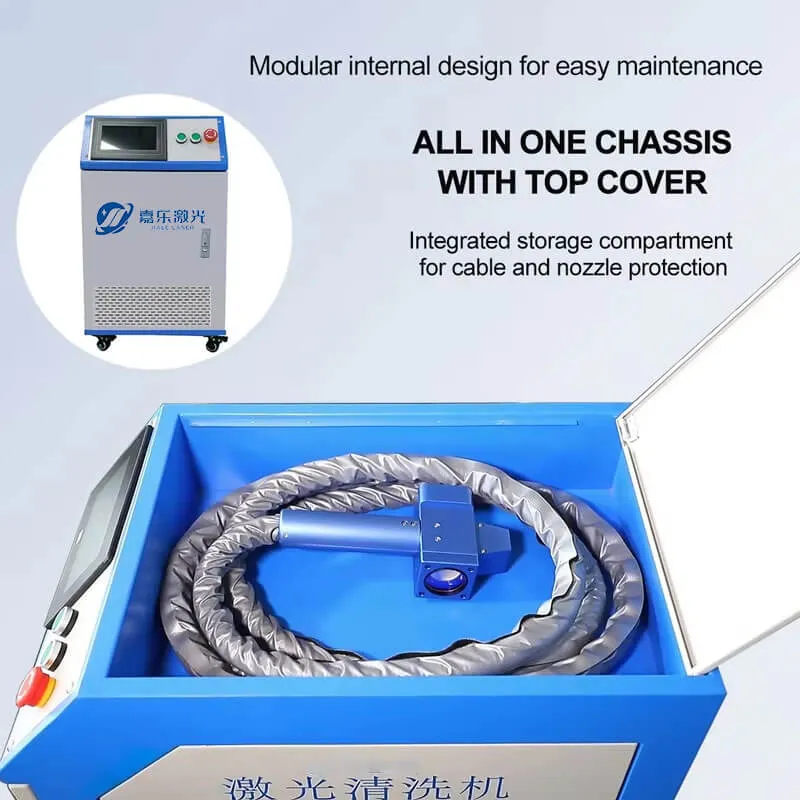
Laser Cleaning Machine Power Selection
- Low-power laser cleaning machine (20W-100W):
- Suitable for smaller-scale and lightly contaminated weld seams, such as surface oxide layers, minor rust, and light oil stains.
- Lower cleaning efficiency, suitable for fine cleaning and high-requirement surface treatments.
- Medium-power laser cleaning machine (100W-500W):
- Suitable for medium-scale weld seam cleaning, such as thicker oxide layers, moderate rust, and heavier oil stains.
- Moderate cleaning efficiency, effectively handling most common weld seam contaminants.
- High-power laser cleaning machine (500W and above):
- Suitable for large-scale, heavily contaminated weld seam cleaning, such as thick rust layers, heavy oxidation, and oil stains.
- High cleaning efficiency, suitable for large-scale industrial applications, with fast processing speed and high efficiency.
Cleaning Efficiency
Cleaning efficiency is affected by various factors, including laser power, scanning speed, focus adjustment, and the type and thickness of contaminants. Below are reference cleaning efficiencies for laser cleaning machines of different power levels:
- Low-power laser cleaning machine (20W-100W):
- Cleaning efficiency: Generally 0.5-2 square meters per hour.
- Suitable for scenarios requiring fine processing, such as cleaning small areas like electronic components and molds.
- Medium-power laser cleaning machine (100W-500W):
- Cleaning efficiency: Generally 2-10 square meters per hour.
- Commonly used for medium-sized equipment, mechanical parts, and welds with moderate levels of contamination.
- High-power laser cleaning machine (500W and above):
- Cleaning efficiency: Generally 10-20 square meters per hour or even higher.
- Suitable for large-scale industrial cleaning, such as weld treatment in ships, bridges, and large machinery.
Other factors affecting cleaning efficiency:
- Scanning speed: Faster scanning speed results in higher cleaning efficiency, but this needs to be coordinated with laser power and focus adjustment.
- Focus adjustment: Proper focus adjustment can improve cleaning efficiency and avoid damage to the material substrate.
- Type and thickness of contaminants: The type and thickness of contaminants directly affect the cleaning effect. Thick rust and oil stains require higher power and more time to clean.
Summary
The appropriate laser cleaning machine power needs to be determined based on the actual application requirements. Low power is suitable for fine cleaning, medium power is suitable for most applications, and high power is suitable for large-scale, heavily contaminated weld cleaning. Cleaning efficiency depends on a variety of factors; properly adjusting these parameters can significantly improve cleaning effect and efficiency.