
Recommended Selection of Common Laser Marking Machines and Compatible Materials
As is well known, laser marking machines are devices that use high-energy-density laser beams to mark permanent patterns, text, or markings on material surfaces. Different types of laser marking machines vary in their laser wavelength and energy characteristics, making them suitable for different materials and applications. Below is a detailed introduction to common types and their compatible materials:
Table of Contents
I. Fiber Laser Marking Machines
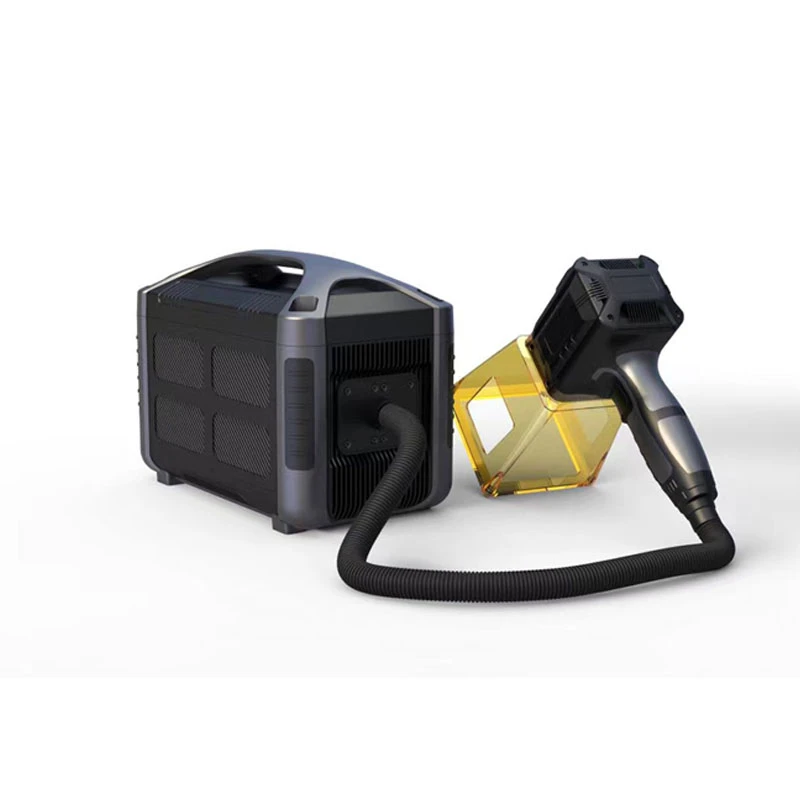
- Laser Principle: Based on rare-earth-doped (e.g., ytterbium) optical fibers as the gain medium, emitting 1064nm infrared laser light (near-infrared band).
- Features: High beam quality, high efficiency, and long lifespan (over 100,000 hours), suitable for high-speed, high-precision marking.
Suitable Materials:
Metal Materials: Stainless steel (oxidation/natural color marking), aluminum alloys (requires high power for clear marking), copper and copper alloys (brass, copper), titanium alloys, galvanized sheets, nickel-plated sheets, etc.
Some Non-metallic Materials: Ceramics (requires surface roughening), engineering plastics (e.g., ABS, nylon, low heat-affected zone), coating materials (e.g., metal plating on mobile phone casings). Typical Applications: Hardware tools, electronic components (chip casings, connectors), automotive parts (engine labels), medical devices (stainless steel surgical instruments), jewelry (engraving).
II. CO₂ Laser Marking Machine
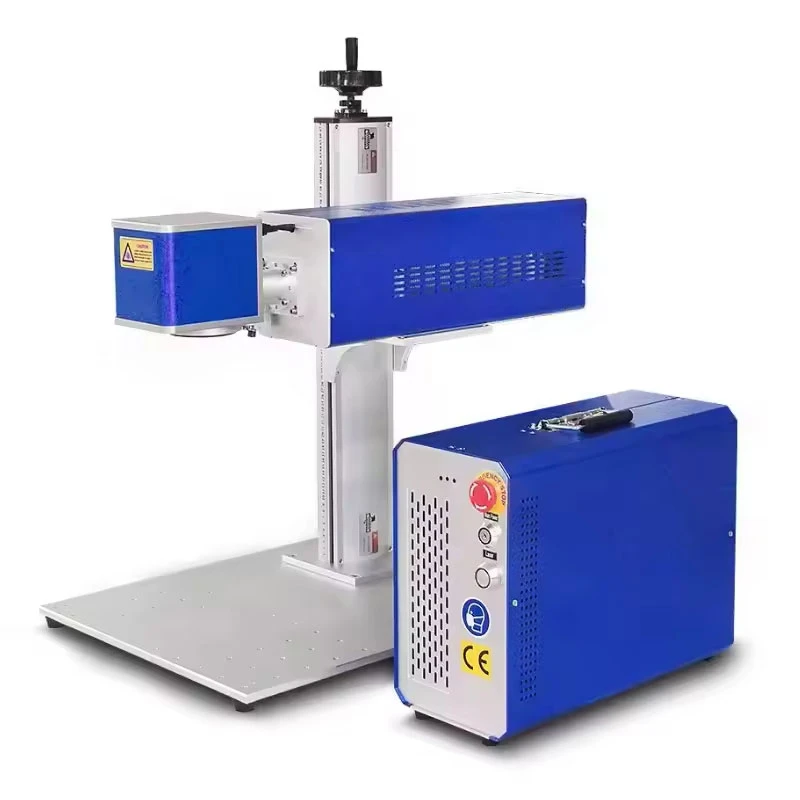
- Laser Principle: Uses CO₂ gas as a medium to emit 10.6μm far-infrared laser light (suitable for non-metallic absorption).
- Features: Low cost, easy maintenance, fine marking lines, but the heat-affected zone is slightly higher than that of ultraviolet light.
Suitable Materials:
Non-metallic Materials: Wood (logs, MDF), paper (wrapping paper, labels), leather (genuine leather, artificial leather), acrylic (transparent/colored sheets), glass (ordinary glass, tempered glass; low power required to avoid cracking), ceramics (glazed or unglazed), plastics (ABS, PC, PVC, PET, PP; some dark-colored plastics are more effective).
Special Surface Metals: Only suitable for materials with a high-absorption coating on the metal surface (such as anodized aluminum, painted steel parts). Typical Applications: Food packaging (cardboard boxes, plastic bottles), clothing accessories (leather labels), handicrafts (wood carvings, acrylic medals), advertising signage (plexiglass signs), electronic components (PCB screen printing).
III. Ultraviolet Laser Marking Machine
- Laser Principle: Utilizes frequency doubling technology to convert 1064nm infrared laser into 355nm ultraviolet laser (short-wave high energy), a “cold processing” process (energy primarily breaks molecular bonds, with minimal heat-affected zones).
- Features: High precision (≤10μm), no ablation, no discoloration, suitable for fragile or high-precision materials.
Suitable Materials: Thermosensitive Materials: Flexible printed circuit boards (FPC), PI film, coverlay; glass (mobile phone screens, optical lenses, no white edges); ceramics (green ceramic tape, electronic ceramics).
Plastics and Films: PC (mobile phone casings), ABS (appliance panels), PET (beverage bottle labels), PI (polyimide film), coatings (pharmaceutical aluminum composite panels). Metals and Semiconductors: Precision metal marking (e.g., gold fingers, chip pads), silicon wafers (integrated circuit marking).
Typical Applications: Mobile phone components (screen glass, camera modules), electronic components (chip silkscreen, BGA marking), medical devices (syringe markings), optical components (lens markings).
IV. Green Laser Marking Machine
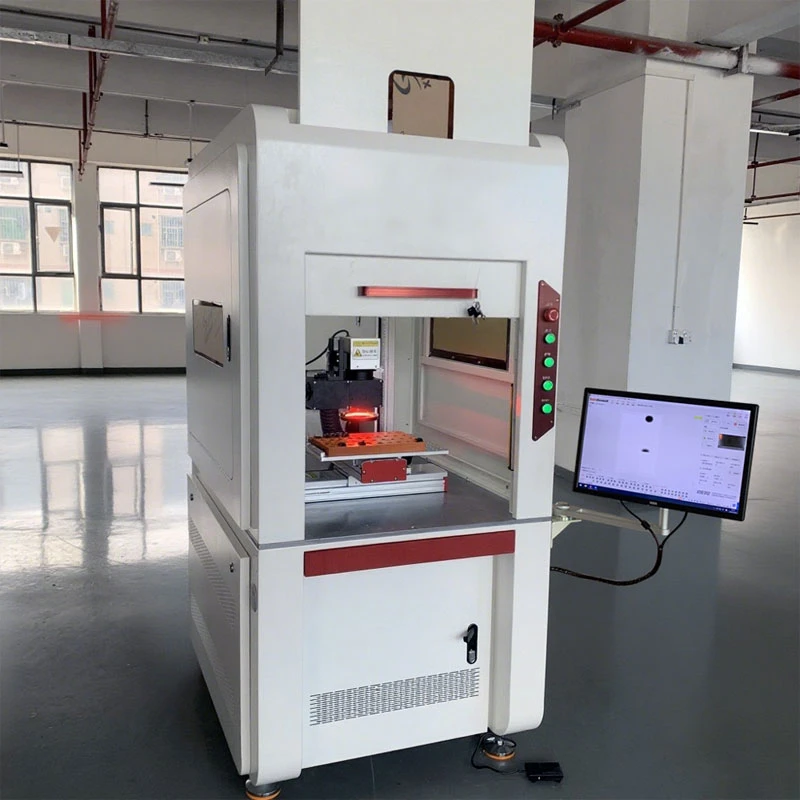
- Laser Principle: Based on Nd:YVO₄ crystal frequency doubling to generate 532nm green light (visible light band).
- Features: High brightness and strong contrast, suitable for scenarios requiring high-visibility marking.
Suitable Materials: Highly reflective materials: Precious metals such as gold, silver, and copper (clear marking without oxidation).
Transparent/Dark Materials: Glass (for engraving transparent marks), crystal (for internal marking), dark plastics (such as black PC; green light has good penetration, resulting in bright white markings).
Special Thin Films: Some optical thin films (such as polarizers and filters). Typical Applications: Jewelry (gold engraving), handicrafts (crystal engraving), optical components (lens marking), high-end packaging (gold foil stamping replacement for cigarette and alcohol gift boxes).
V. Semiconductor-Pumped Laser Marking Machine (DPSSL)
- Laser Principle: Uses a semiconductor diode to pump a YAG crystal, emitting a 1064nm laser (similar to fiber optics, but with a different structure).
- Features: An early mainstream model, now gradually being replaced by fiber optics; low cost but slightly lower stability.
Suitable Materials: Similar to fiber optics, primarily for metals (stainless steel, aluminum) and some plastics, but efficiency and lifespan are lower than fiber optics.
VI. Ultrafast Laser Marking Machine (Picosecond/Femtosecond)
- Laser Principle: Pulse width ≤ 10⁻¹² seconds (picoseconds) or 10⁻¹⁵ seconds (femtoseconds); ultrashort pulses reduce heat diffusion.
- Features: Extremely high precision; can process any material with virtually no thermal damage.
Suitable Materials: Brittle materials (glass, ceramics), semiconductors (silicon, gallium arsenide), composite materials (carbon fiber), high-melting-point materials (tungsten, molybdenum).
Typical Applications: Semiconductor chips (nanoscale marking), aerospace components (high-temperature alloy engraving), precision instruments (sensor marking).
Laser Marking Machine Selection Recommendations:
Mainly Metals: Fiber laser marking machines are preferred (high efficiency, stable).
Mainly Non-metals: CO₂ laser marking machines (low cost, suitable for most non-metals).
Thermosensitive/Precision Materials: UV or ultrafast laser marking machines (no ablation, high precision).
Highly Reflective/Transparent Materials: Green or UV laser marking machines (high contrast, minimal damage).
Conclusion
Selecting a suitable laser marking machine based on the specific material’s absorption characteristics, marking accuracy requirements, and cost budget will achieve the best results. Yunyue Technology offers a complete visual marking solution based on traditional laser marking. It uses camera positioning to guide laser marking, enabling products to be placed anywhere, at any angle, and in any shape, with automatic environmental recognition, and can automatically mark multiple products at once.