
Laser optical components: the cornerstone of industrial laser equipment performance
Laser processing technology has been widely applied in industrial manufacturing fields such as cutting, welding, marking, and cleaning, becoming an important part of modern manufacturing. With the continuous increase in laser power (from hundreds of watts to tens of thousands of watts), optical components face challenges in areas such as high energy density, thermal stability, and lifespan. The performance of laser optical components directly affects the processing quality, production efficiency, and lifespan of laser equipment, making them a key component of industrial laser equipment.
Table of Contents
Analysis of Key Optical Component Technologies for CO₂ Laser Systems
CO₂ lasers (10.6μm) are one of the most widely used types of lasers in the industrial field, mainly used for processing non-metallic materials and cutting some thick metal plates. The table below lists the technical parameters of key components in a CO₂ laser system:
Component Type | Material | Specification Range | Coating Parameters | Main Features
CO₂ Laser Focusing Mirror | Zinc selenide (imported/domestic) | Diameter Φ12.7-50.8mm, Focal Length 25.4-190.5mm | 10.6μm | Double-sided anti-reflective coating, transmittance ≥ 99.2% | Fine spot (focal spot down to 0.1mm), concentrated energy, processing accuracy ±0.01mm
CO₂ Laser Reflector | Monocrystalline silicon / Copper / Glass | Diameter Φ2-100mm | HR 10.6μm, reflectivity ≥ 99.8% (silicon/copper) | Monocrystalline silicon reflector is scratch-resistant and has a long lifespan; copper substrate has excellent thermal conductivity (401 W/(m·K))
CO₂ Laser Protective Mirror | Imported zinc selenide | Diameter 80-150mm, rectangular L85×W60 to… L200×W140, thickness 3-6mm, 10.6μm high-transmittance film to block splashes and dust, protecting the internal focusing lens. CO₂ laser beam combiner, imported zinc selenide, diameter 12.7-150mm, thickness 2-3mm, 650nm transmission (≥85%) + 10.6μm reflection (≥99%), enabling laser visualization and positioning, “what you see is what you get”. Laser cavity mirror (reflection/output), silicon/zinc selenide, diameter 9.525-38.1mm, 10.6μm high-reflectance dielectric film / output transmittance 10%-45%, low temperature, no film peeling, good spot mode (TEM₀₀).
CO₂ laser focusing lens: uses imported or domestic high-purity zinc selenide substrate (purity ≥ 99.995%), transmittance ≥ after double-sided antireflection coating. 99.2% reflectivity, enabling precise laser focusing with a processing accuracy of ±0.01mm and a focal spot uniformity ≥ 95%. The gallium arsenide version is suitable for higher power (≥ 500W) applications, with a thermal conductivity of 55 W/(m·K).
Monocrystalline silicon mirror: Reflectivity ≥ 99.8%, high surface hardness (Mohs 6.5), abrasion resistant, adaptable to harsh environments, and long service life.
Copper mirror: Thermal conductivity ≥ 400 W/(m·K), suitable for high-power CO₂ laser systems, enabling rapid heat dissipation and preventing mirror thermal deformation.
Beam combiner: Combines the 650nm red light indicator with the 10.6μm processing laser, improving adjustment efficiency by more than 5 times.
Key optical component technologies for fiber laser systems
Fiber lasers have advantages such as high conversion efficiency (>30%), good beam quality (M² ≤ 1.1), and low maintenance costs, and have gradually become the mainstream technology for industrial lasers. The table below lists the technical parameters of key components in a fiber laser system:
Component Type | Applicable Wavelength (nm) | Key Parameters | Main Applications
Fiber Laser Protective Lens | 1064 | Damage threshold > 15 J/cm², transmittance > 99.8% | Laser cutting machines, laser welding machines, protecting focusing lenses
F-Theta Field Lens | 1064 | Scanning range 36×36 – 300×300 mm, focal length f72 – f424 mm, distortion ≤ 0.5% | Laser marking, laser engraving, large-format cutting
Laser Beam Expander | 355/532/1064/10600 | Magnification 2× – 5×, total transmittance ≥ 95% | Improves processing resolution, extends working distance
Galvanometer Scanning Lens | 1064/10600 | Reflectivity > 99.5%@1064nm, >99.8%@10.6μm | High-speed laser scanning processing, scanning speed ≥ 30000 mm/s
Fiber Laser Protective Lens: Coated with a high damage threshold 1064nm antireflective coating (single-sided > 99.5%, double-sided > 99.0%), significantly increasing lens transmittance and reducing energy loss (each 1% increase in transmittance corresponds to approximately 1W increase in effective power for a 100W laser), protecting the focusing lens from spatter damage. The substrate is made of fused silica with a thermal expansion coefficient of only 0.52×10⁻⁶/K.
F-Theta Field Lens: Achieves uniform focusing across a large working area through the linear relationship of F·θ, with full-area focusing consistency better than 2% and distortion ≤ 0.5%. Employing a telecentric design, the edge incident angle is controlled within ±5°, ensuring edge spot quality.
Laser beam expander: First, it expands the beam diameter (usually 2-5 times), then focuses to obtain a smaller focal point (the focal spot diameter is inversely proportional to the beam expansion factor), improving processing resolution and extending the working distance (can be increased by 2-5 times), suitable for thick plate cutting and long-distance processing.
Galvanometer scanning mirror: Uses a single-crystal silicon or quartz substrate, with low density (2.33 g/cm³), high rigidity, scanning speed up to 30,000 mm/s, acceleration > 3g, and positioning accuracy ±0.01 mm.
Key technical indicators and industry standards
All laser optical components are manufactured in strict accordance with industry standards:
Indicators: Standard Value | Testing Method
Surface Quality: 60-40 (scratches/pitting), conforming to ISO 10110 standard (high-magnification microscope comparison standard plate)
Flatness: λ/2 – λ/10 @ 632.8nm (depending on accuracy level) (ZYGO laser interferometer)
Coating Uniformity: ±1%, ensuring consistent energy distribution across the entire aperture (spectrometer multi-point scanning)
Laser Damage Threshold: > 15 J/cm² @ 1064nm (10ns pulse), customizable ≥ 20 J/cm² (ISO 21254 damage threshold test bench)
High-power laser components (≥ 2000W) require additional continuous laser aging test (500 hours of continuous operation at rated power, transmittance attenuation ≤ 0.5%).
Laser Equipment Application Solutions
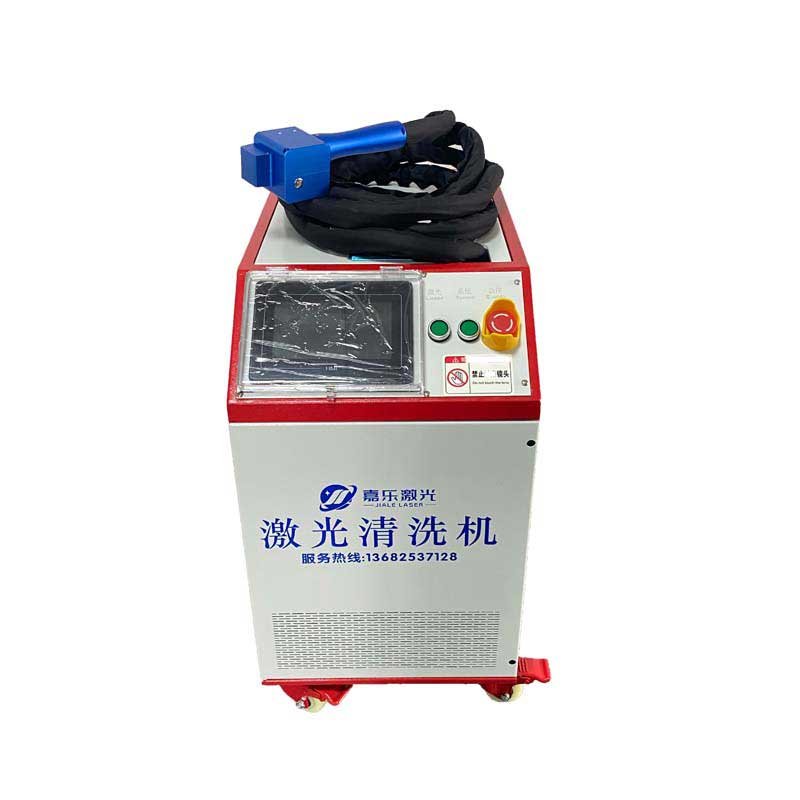
Fiber laser protective lenses, F-Theta field lenses, and beam expanders (500W-20000W): Increased cutting speed, surface roughness Ra < 6.3μm, suitable for carbon steel, stainless steel, and aluminum alloys. Laser welding machines: Focusing lenses, protective lenses, and galvanometers (500W-6000W): Adjustable welding depth 0.1-10mm, penetration deviation < 5%, suitable for automotive, 3C, and medical device applications. Laser marking machines: CO₂/fiber laser lenses, galvanometers, and field lenses (10W-100W): Marking accuracy ±0.01mm, marking speed > 7000mm/s, suitable for metals, plastics, glass, and ceramics. Laser cleaning machines: High-power protective lenses and focusing lenses (100W-2000W): Non-contact cleaning, no consumables, suitable for rust removal, paint removal, oil removal, and mold cleaning.