
Laser Cleaning vs. Dry Ice Cleaning: Which Should You Choose For Rubber And Plastic Molds?
The core contaminants in rubber and plastic molds mainly consist of vulcanization residue, carbon deposits, mold release agent scale, and dirt embedded in small venting channels/textures. Cleaning requirements focus on precision, non-destructive cleaning, high efficiency, environmental protection, and adaptability to complex cavities. The following is a detailed comparison from three aspects: principles, core indicators, and application scenarios.
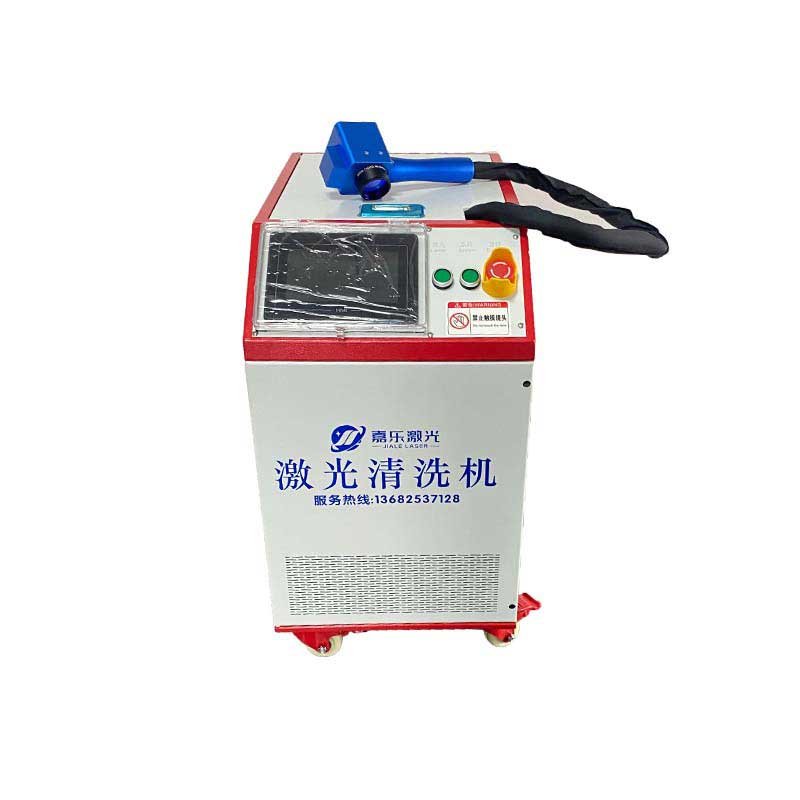
Table of Contents
Principles and core features
Laser Cleaning (1064nm Pulsed Fiber Laser)
Principle: High-energy pulsed laser selectively vaporizes dirt (dirt absorption rate > 85%, metal substrate reflectivity > 95%), and photothermal + shock wave effects remove contaminants with zero damage to the substrate.
Features: Non-contact, precise and controllable, programmable, spot can be focused to 0.1mm level.
Dry Ice Cleaning (-78.5℃ Solid CO₂)
Principle: High-speed jetting of dry ice particles removes dirt through kinetic energy impact, low-temperature embrittlement, and sublimation expansion. The dry ice sublimates immediately upon contact, leaving no residue.
Core Characteristics: Physical impact, robust yet efficient, relies on consumables, particle diameter approximately 3mm.
Direct comparison of seven core indicators
Cleaning Precision and Deep Texture/Ventilation Capability (Key to Rubber and Plastic Molds)
Laser Cleaning: ★★★★★
Adjustable spot size from 0.8 to 1.2 mm, precisely penetrating 0.1 mm-level crevices, deep textures, and tiny ventilations; dead-angle cleaning rate ≥99%; cell depth recovery ±2μm; no mechanical impact, does not damage mirror surfaces, textures, or sharp edges.
Dry Ice Cleaning: ★★★☆☆
3 mm particles, difficult to penetrate <1 mm narrow gaps; high residue rate at the root of textures and ventilations; long-term high-frequency cleaning will slightly wear down the edges of textures (approximately 0.21 mm wear after 500 cycles); precision mirror surfaces are prone to loss of shine.
Mold Protection (Core of High-Value Molds)
Laser Cleaning: ★★★★★
Non-contact, impact-free, and heat-accumulation-free (pulse nanosecond level), leaving steel/aluminum/copper molds and chrome/nitride plating undamaged; after 500 cleaning cycles, mold wear is only 0.03mm, extending lifespan by 30%+.
Dry Ice Cleaning: ★★★☆☆
Dry ice has low hardness (2~3Mhos), causing no significant damage to ordinary molds; however, high-speed impact can easily cause thin plating bulges and minor chipping of chamfered edges; low-temperature thermal shock to aluminum/copper molds can easily cause surface whitening.
Cleaning Efficiency and Downtime
Laser Cleaning: ★★★★☆
10~20 minutes for a single set of small to medium-sized rubber and plastic molds, 30~40 minutes for large tire molds; can be cleaned online, without demolding/cooling, reducing downtime by 60%+.
Dry Ice Cleaning: ★★★★★
Fastest speed, 15-30 minutes per mold; no need for mold disassembly/cooling, direct operation on high-temperature molds, reducing downtime by 80%-95%.
Cost Structure (Long-Term vs. Short-Term)
Laser Cleaning: High Investment, Zero Consumables, Low Long-Term Costs
1000W equipment costs approximately 80,000-150,000 RMB, no consumables, only electricity (0.5-0.8 RMB per cycle); annual maintenance cost < 5,000 RMB, payback period 3-6 months, long-term (2+ years) cost is 70%+ lower than dry ice.
Dry Ice Cleaning: Low Investment, High Consumables, High Long-Term Costs
Equipment costs approximately 50,000-100,000 RMB, dry ice consumables 3-5 RMB/kg, consumable cost per mold 200-300 RMB; annual consumable costs 800,000-1,200,000 RMB, high long-term costs.
Environmental Protection and Safety
Laser Cleaning: ★★★★★
Zero chemicals, zero wastewater, zero dust (with negative pressure dust removal), noise <78dB, fully compliant with environmental impact assessment, no safety hazards.
Dry Ice Cleaning: ★★★☆☆
No chemical residue, but noise >120dB (strong noise pollution); dry ice sublimation absorbs heat, potentially leading to oxygen deficiency in enclosed spaces; dust diffuses openly, requiring protective measures.
Automation and Stability
Laser Cleaning: ★★★★★
Programmable parameters, compatible with robots/fully automated workstations, 24-hour continuous stable operation (water-cooled industrial machine), 100% cleaning consistency.
Dry Ice Cleaning: ★★★☆☆
Primarily manual operation, high automation difficulty; dry ice is prone to moisture and clumping, affecting stability; relies on air compressors, pressure fluctuations affect results.
Material Compatibility (Multiple Material Applications for Rubber and Plastic Molds)
Laser Cleaning: Compatible with all materials
Steel molds, aluminum molds, copper molds, chrome-plated/nitrided molds, and mirror-finish molds are all compatible. Parameters are adjustable to suit different materials.
Dry Ice Cleaning: Prefers steel molds; use with caution on soft/high-reflectivity molds.
Steel molds show good results; aluminum/copper molds are prone to whitening and slight deformation due to low-temperature impact; high-reflectivity molds have weak cleaning power.
Selection Recommendations
Scenarios where laser cleaning is preferred
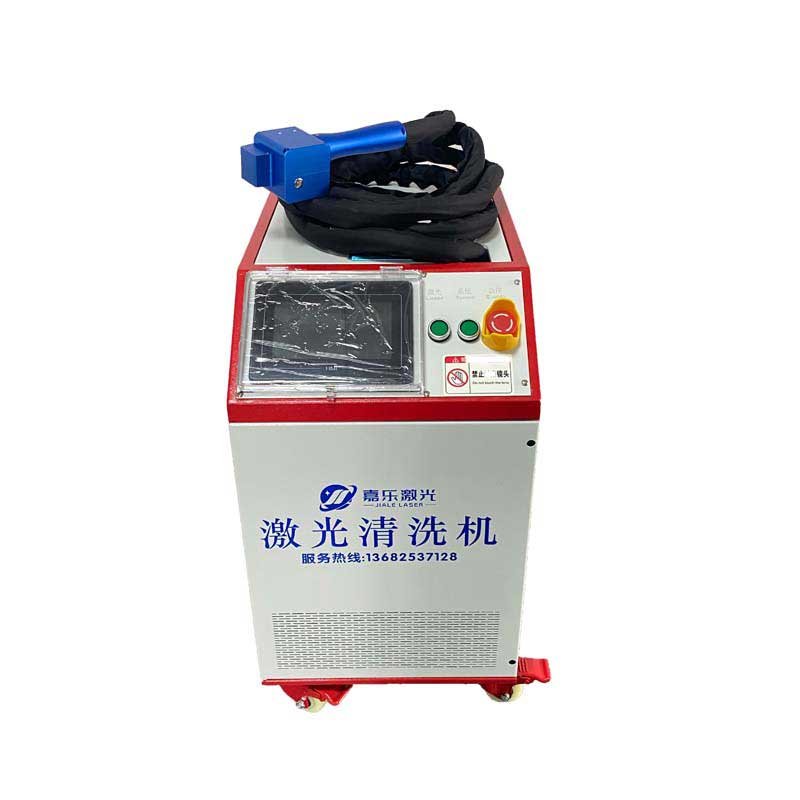
Precision rubber and plastic molds: mirror finish, leather texture, small venting channels, deep grooves (e.g., tire molds, precision injection molded parts);
High-value molds: unit price > 50,000 RMB, long-term high-frequency use (e.g., automotive interior molds, medical component molds);
Complex cavities/many narrow gaps: complex mold structure, many dead corners, dry ice cannot reach;
Long-term production/automated production lines: 24-hour continuous operation, requiring stable consistency, strict environmental protection requirements;
Molds with plating: chrome plating, nitriding layers, requiring strict damage prevention.
Scenarios where dry ice cleaning is preferred
Ordinary/low-value molds: simple structure, no precision grooves, unit price < 20,000 RMB;
Short-term/small-batch production: limited budget, short-term cost reduction, occasional maintenance;
Rapid on-site maintenance: no mold disassembly required, rapid decontamination, meeting deadlines;
Thick, stubborn dirt: large areas of sulfide scale, carbon deposits, requiring rapid removal.
Conclusion
The core assets of rubber and plastic molds are precision and lifespan. Although laser cleaning requires a high initial investment, it can precisely protect every line and every venting groove, avoiding product defects and premature mold scrapping caused by long-term wear. It is the best long-term solution for high-value rubber and plastic molds.