
How Can Laser Cleaning Machines Avoid Damaging Substrates?
Laser cleaning machines can clean substrates without damaging them primarily due to the following reasons:
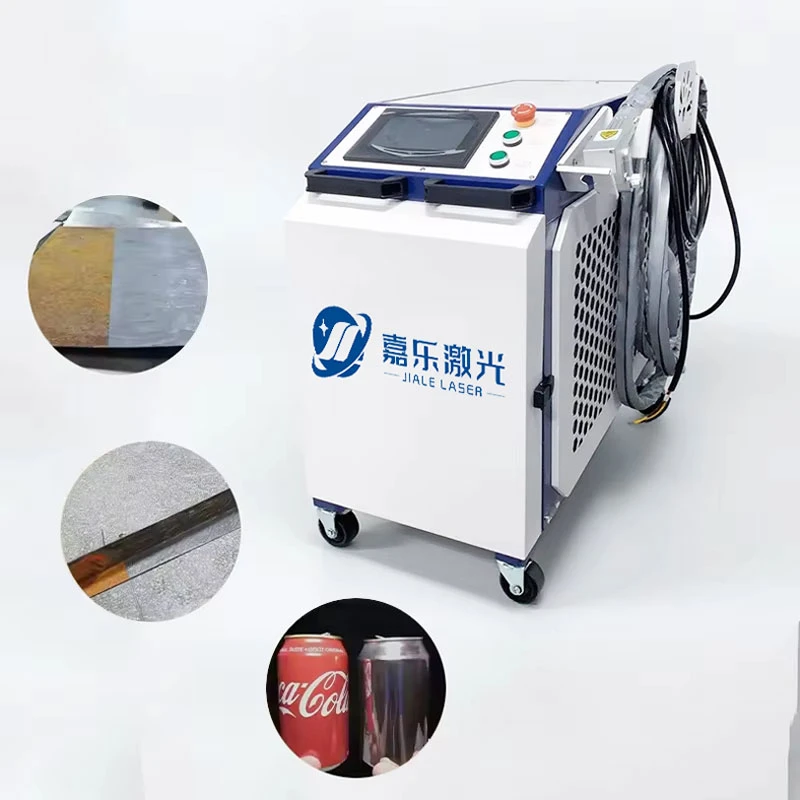
Highly Controllable Energy: The laser beam used in laser cleaning machines has a highly controllable energy density. Operators can adjust the laser energy and parameters according to different cleaning tasks, adapting it to the cleaning needs of different materials and surfaces. Precise control of energy density avoids damage to the substrate surface.
Short Pulse Width: Laser cleaning machines typically employ ultrashort pulse laser technology. This means the laser pulse width is extremely short, lasting only on the nanosecond scale. Due to the very short pulse duration, the laser energy acts on the substrate surface for a very short time, preventing excessive heat conduction and accumulation, thus reducing the risk of thermal damage to the substrate.
Highly Concentrated Energy: Laser cleaning machines can highly concentrate energy within a small area. By focusing the laser beam, energy can be precisely applied to dirt or coatings without excessive impact on the surrounding substrate surface. This highly concentrated energy results in more precise cleaning while reducing mechanical impact and damage to the substrate surface.
Non-Contact Cleaning: Laser cleaning is a non-contact cleaning method. The laser beam is transmitted through the air, eliminating the need for physical contact with the substrate surface. This avoids scratches, wear, and other damage caused by mechanical contact.
Despite the advantages of laser cleaning machines, it is still important to carefully select laser energy and parameters during operation, and avoid cleaning the same location for extended periods to prevent damage to the substrate surface. Furthermore, a thorough understanding of the substrate material and surface characteristics should be obtained before cleaning, and the feasibility and risks of laser cleaning should be reasonably assessed to avoid unnecessary damage to the substrate.