
Comprehensive Guide to Exploring 3D Laser Engraving Machines
In the fields of cultural and creative customization, craft gifts, and precision manufacturing, traditional engraving techniques can only process the surface of materials, making it difficult to achieve the effect of “internal three-dimensional imaging,” and creating deep patterns on transparent materials is an industry challenge. The emergence of 3D laser engraving machines, using non-contact laser processing technology, allows for the “drawing” of three-dimensional patterns inside transparent materials such as crystal and glass, without damaging the material surface, thus creating a floating, three-dimensional visual effect.
Table of Contents
What is a 3D Laser Engraving Machine?
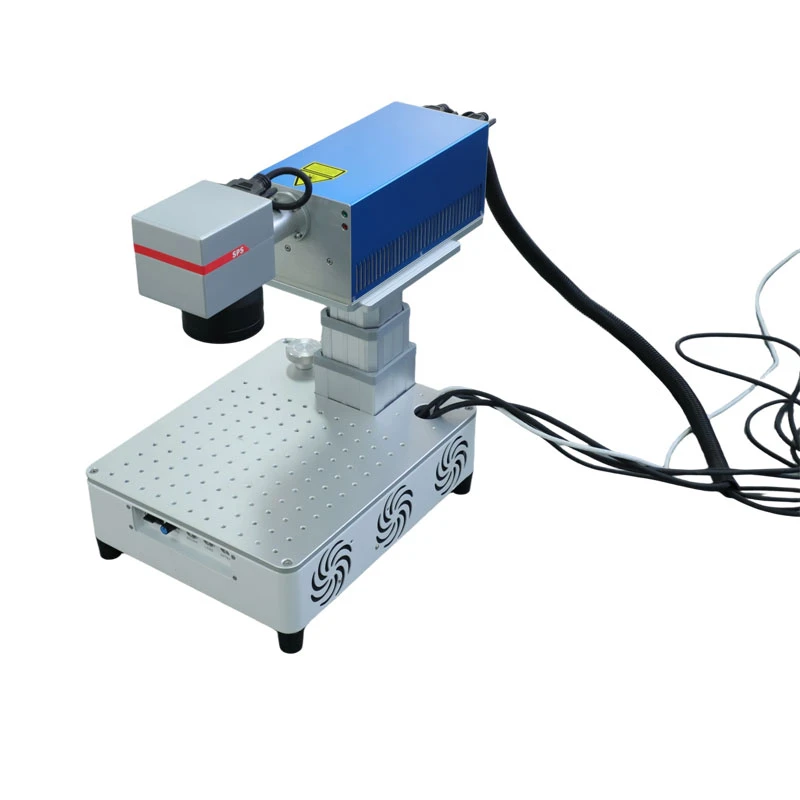
3D laser engraving machine is a high-precision laser processing device specifically designed for transparent hard materials, also known as a crystal engraving machine or a three-dimensional laser engraving machine. It uses a 532nm green or 355nm ultraviolet pulsed laser, combined with a precision three-dimensional motion control system and a high-speed galvanometer, to precisely focus the laser inside the material. Using pre-set 3D model data from a computer, it generates micron-level crack points point by point inside the material, ultimately piecing them together to form a three-dimensional pattern. The entire process does not damage the material surface, resulting in a transparent, beautiful, and highly three-dimensional finished product.
Working Principle of 3D Laser EngravingMachine
The core of a 3D laser engraving machine lies in laser nonlinear focusing and micro-explosion technology. The processing can be summarized in four main steps: “penetration—focusing—point formation—forming”:
Laser Penetration: The equipment outputs a specific wavelength laser (commonly 532nm green light), which can penetrate the surface of transparent materials such as crystal and glass without damage or scratches.
Precise Focusing: An optical lens focuses the laser beam to a specified depth within the material, forming a focal point with extremely high energy density (10⁸-10¹²W/cm²).
Micro-Explosion Point Formation: The energy at the focal point instantaneously exceeds the material’s damage threshold, triggering a nonlinear absorption effect that creates micron-sized vaporization burst points (approximately 10-100μm in diameter) within the material, forming white reflective points.
3D Forming: The control system drives the laser focal point to move along the 3D model path, precisely marking points in the X/Y/Z axes. Countless tiny burst points stack up layer by layer, ultimately forming a three-dimensional pattern or text.
Core Structure of 3D Laser Engraving Machine
Laser Emission System: The core is a 532nm green laser (mainstream) or a 355nm ultraviolet laser, outputting stable, high-energy pulsed laser light that determines engraving precision and material compatibility.
Precision Motion Platform: A three-axis CNC moving platform with servo motors, achieving a positioning accuracy of ±0.01mm to ensure precise focus positioning.
High-Speed Galvanometer System: Rapidly scans the laser beam, achieving engraving speeds up to 3000 points/second, improving the efficiency of processing complex patterns.
Intelligent Control System: Supports importing various 3D file formats such as STL, OBJ, and 3DS, and can generate engraving paths with one click, making operation simple and easy to learn.
Water-Cooling/Air-Cooling Heat Dissipation System: Real-time cooling of the laser to prevent overheating from affecting precision and ensure long-term continuous operation of the equipment.
Safety Protective Housing: Enclosed design with built-in laser protection to prevent laser leakage, ensuring safe and pollution-free operation.
Advantages of 3D Laser Engraving Machine
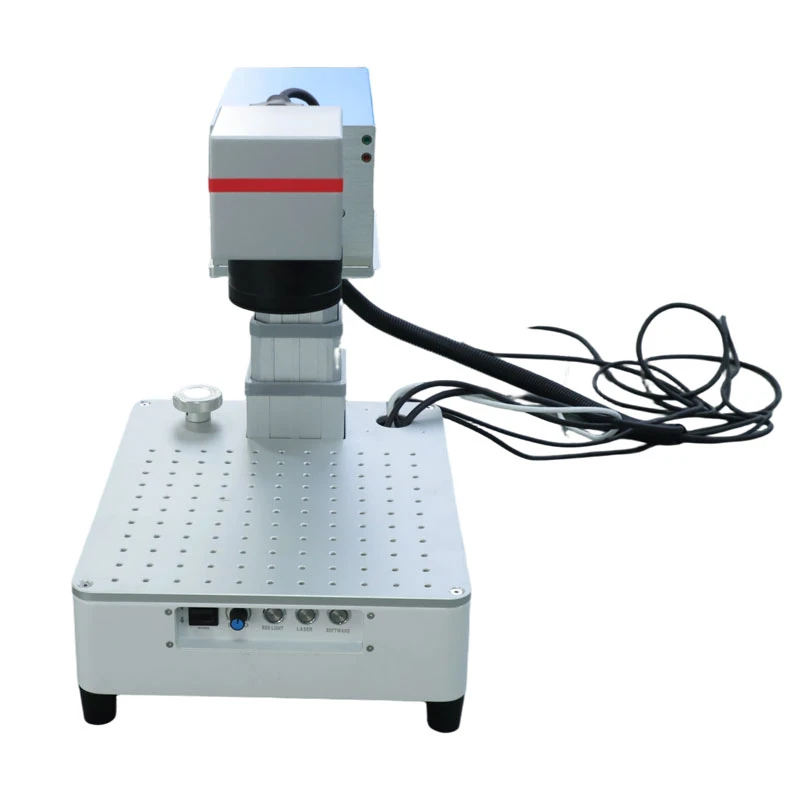
Smooth Surface Processing
The entire process operates within the material, leaving the surface smooth and undamaged. Engraved patterns appear to float within the material, offering excellent light transmission, a strong three-dimensional effect, and a stunning visual impact.
Ultra-High Precision
The laser focusing spot can reach the micron level, with a minimum engraving point diameter of only 48μm. This allows for precise reproduction of facial features, text textures, and intricate model details, without jagged edges or blurring.
Non-Contact Processing
No tool contact with the material is required, avoiding cracking and deformation caused by mechanical stress. It is compatible with various transparent materials such as artificial crystal, K9 glass, quartz glass, acrylic (PMMA), and zircon.
Simple Operation
Supports direct import of 3D models. Beginners can operate the equipment after simple training. The engraving speed is fast, allowing for batch processing of crystal ornaments, gifts, anti-counterfeiting labels, etc., with a high yield rate.
Safe and Stable Operation
The processing is dust-free, noise-free, and free of chemical pollution. The enclosed laser protection design prevents radiation leakage, allowing the equipment to operate continuously for 24 hours with a low failure rate.
Applications of 3D Laser Engraving Machines
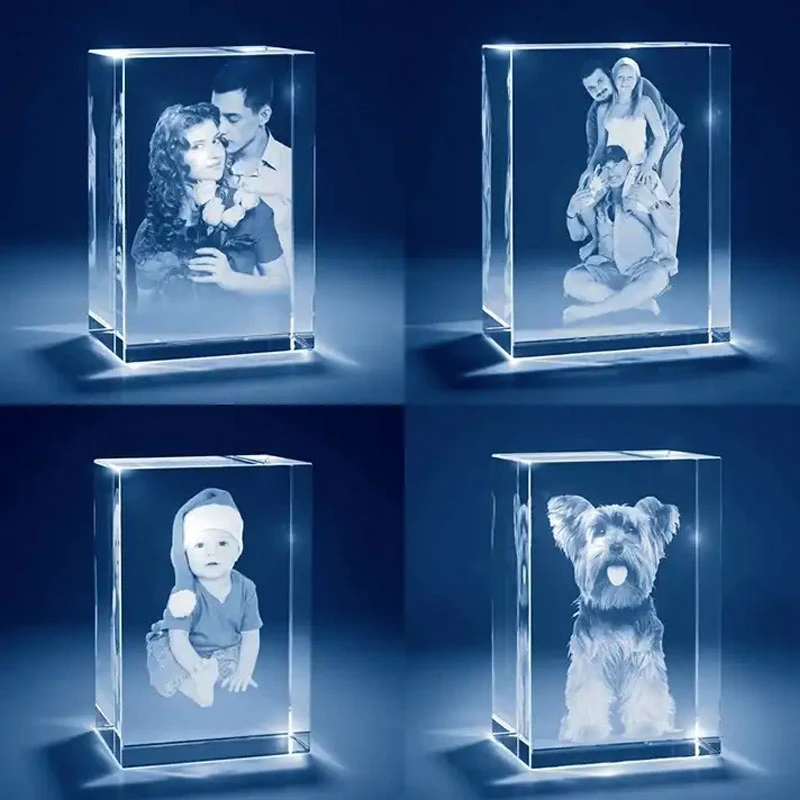
Customized Cultural and Creative Gifts
3D Crystal Portrait Ornaments, Crystal Couple Souvenirs, Trophies and Medals, Crystal Keychains, Tourist Souvenirs.
Commercial Advertising Displays
Brand Logo Engraving, Glass Decorative Paintings, Transparent Exhibition Exhibits, Hotel Crystal Decorations.
Industrial Precision Manufacturing
Glass Microfluidic Chips, Internal Marking of Optical Components, Anti-counterfeiting Internal Engraving for High-End Wine Bottles, Microstructure Processing of Mobile Phone Glass.
Art and Scientific Research
Museum Cultural and Creative Product Replicas, 3D Art Glass, Biomedical Models (such as Internal Engraving of Blood Vessels and Bones).
Conclusion
3D laser engraving machines break through the spatial limitations of traditional engraving, transforming ordinary transparent materials such as crystal and glass into three-dimensional works of art and practical value. From personalized cultural and creative gifts to precision industrial components, from artistic creation to anti-counterfeiting and traceability, its application scenarios are constantly expanding, injecting new vitality into the transparent material processing industry.