
What is Robotic Laser Welding Machine?
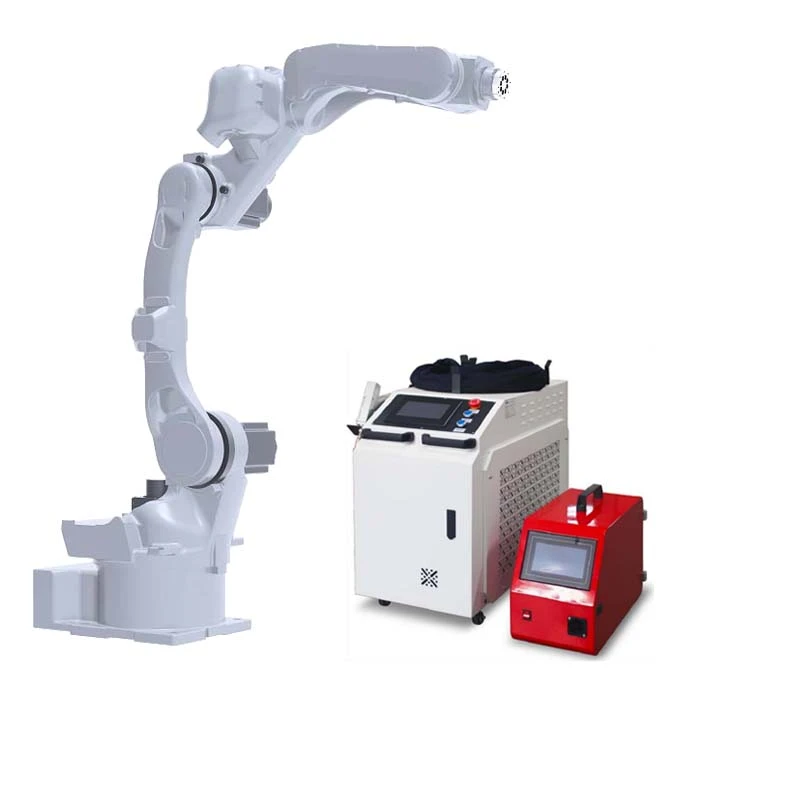
Robotic laser welding machines are automated welding equipment that intelligently combines fiber laser welding systems with multi-axis industrial robots. They use robots to replace manual welding heads and utilize high-energy laser beams as heat sources to perform high-precision, continuous, and stable fusion welding on metal workpieces.
The equipment mainly consists of three parts: a robotic arm system, a laser source and optical system, and a control system. Through multi-axis linkage control of the robot to control the welding torch trajectory, combined with a high-energy-density laser beam as a heat source, it can automatically process complex welds in three-dimensional space.
Table of Contents
Features of Robotic Laser Welding Machines
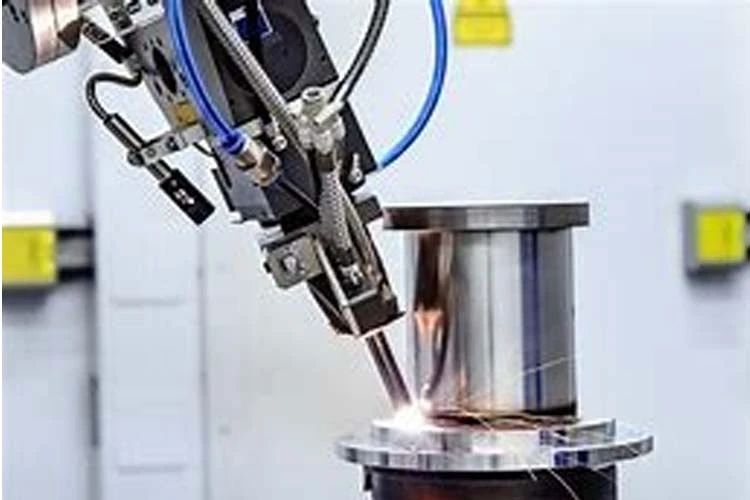
Non-contact processing
The laser beam is focused to a micron-level spot (as small as 0.1mm), eliminating the need for physical contact with the workpiece and reducing mechanical wear.
Small heat-affected zone
Localized instantaneous heating minimizes heat exposure to the substrate and surrounding components, resulting in low weld deformation, making it suitable for precision parts.
High welding speed: Up to 6–12 meters per minute, increasing efficiency by more than 30% compared to traditional welding methods.
Supports multiple processes
Enables deep penetration welding, heat conduction welding, and filler wire welding, suitable for all-position welding including flat, vertical, and overhead welding.
High level of intelligence
Integrates AI vision algorithms, CCD weld seam recognition, and adaptive control to achieve automatic weld seam positioning and parameter optimization.
Applications of Robotic Laser Welding Machines
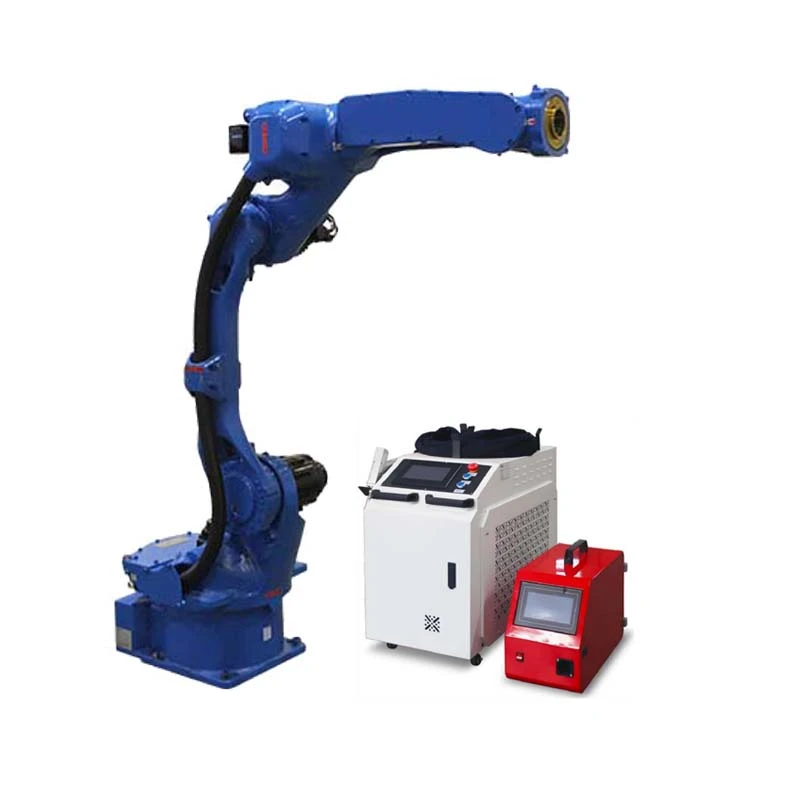
3C Electronics
Welding of micro-components such as mobile phone cameras, LCD modules, and micro-motors.
Automotive Manufacturing
Welding of body structural parts, power battery modules, and aluminum alloy components.
Aerospace
Jointing of high-end alloys and dissimilar metals.
New Energy
Key processes such as lithium battery tabs and cell packaging.
Advantages of Robotic Laser Welding Technology Compared To Traditional Welding
| project | Robotic laser welding | Traditional arc welding |
|---|---|---|
| Positioning accuracy | ±0.05mm level | ±±0.5mm level |
| Heat distortion | extremely small | obvious |
| Degree of automation | High performance, supports offline programming and visual guidance. | Relying on manual teaching |
| Maintenance costs | No electrode loss, low maintenance | Welding heads are easily damaged and require frequent replacement. |
Conclusion
Robotic laser welding refers to the manufacture of various parts, from simple to complex, using robotic laser welding machines. Once a suitable machine is selected, different parts can be welded.
At JIALELASER, we use robotic laser welding machines to process various components, all of which are customized to customer requirements. For any custom robotic laser welding machine needs, send an inquiry now.