
What is Continuous Laser Cleaning Machine?
Continuous laser cleaning machines are high-efficiency, heat-affected zone, and environmentally friendly laser cleaning equipment. Understanding the basic components and performance of such machines will help you make a more prudent and practical decision when selecting laser cleaning equipment. Read this guide to learn more about continuous laser cleaning machines.
Table of Contents
What is Continuous Laser Cleaning Machine?
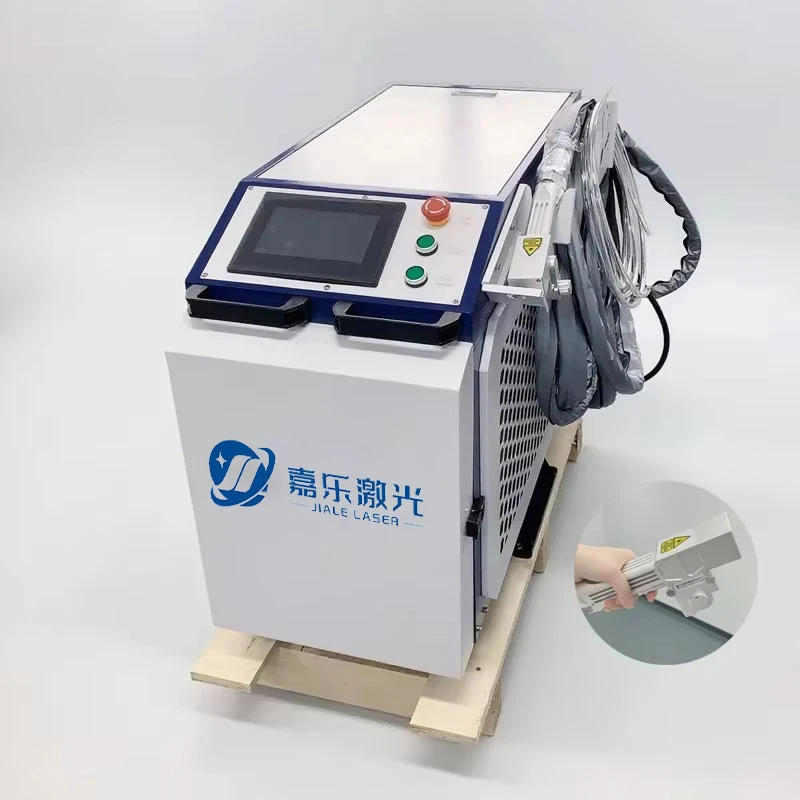
Continuous laser cleaning machines are high-tech devices that use high-energy continuous laser beams to perform non-contact cleaning of material surfaces. Their core principle is to achieve efficient, precise, and environmentally friendly cleaning by using the physical and chemical effects generated by the interaction between laser and matter.
Working Principle of Continuous Laser Cleaning Machine
Laser-Matter Interaction
Continuous laser cleaning machines emit a high-energy-density continuous laser beam, which is then applied to the surface to be cleaned. The laser energy is absorbed by surface contaminants (such as oil, rust, coatings, oxides, etc.), rapidly heating them to their melting or boiling points, producing the following effects:
Thermal Expansion Effect: The contaminants expand due to heat, creating a stress difference with the substrate material, leading to peeling.
Vaporization Effect: The contaminants directly vaporize or decompose into gases, which are carried away by the airflow.
Vibration Effect: The shock wave generated by the laser pulse loosens and detaches the contaminants.
Non-Contact Cleaning
The laser beam is focused by a focusing lens and scans the surface as a spot, eliminating the need for physical contact and avoiding mechanical damage to the substrate material.
Features of Continuous Laser Cleaning Machine
Highly Efficient and Precise
Laser energy can be precisely controlled, achieving cleaning depths down to the micron level, suitable for complex structures or precision parts.
Stable continuous laser output power, suitable for large-area, high-speed cleaning needs.
Environmentally Friendly and Pollution-Free
No chemical solvents or abrasives are required, reducing wastewater and waste emissions, meeting green manufacturing requirements.
The cleaning process is noiseless, suitable for environments with stringent environmental requirements (such as the food and pharmaceutical industries).
Highly Adaptable
Can clean metals (such as aluminum, copper, and steel), non-metals (such as ceramics, glass, and plastics), and composite materials.
Suitable for various surface morphologies, including flat surfaces, curved surfaces, and irregularly shaped structures.
Automated Integration
Can be integrated with robots and vision systems to automate cleaning processes and improve production efficiency.
Application of Continuous Laser Cleaning Machine
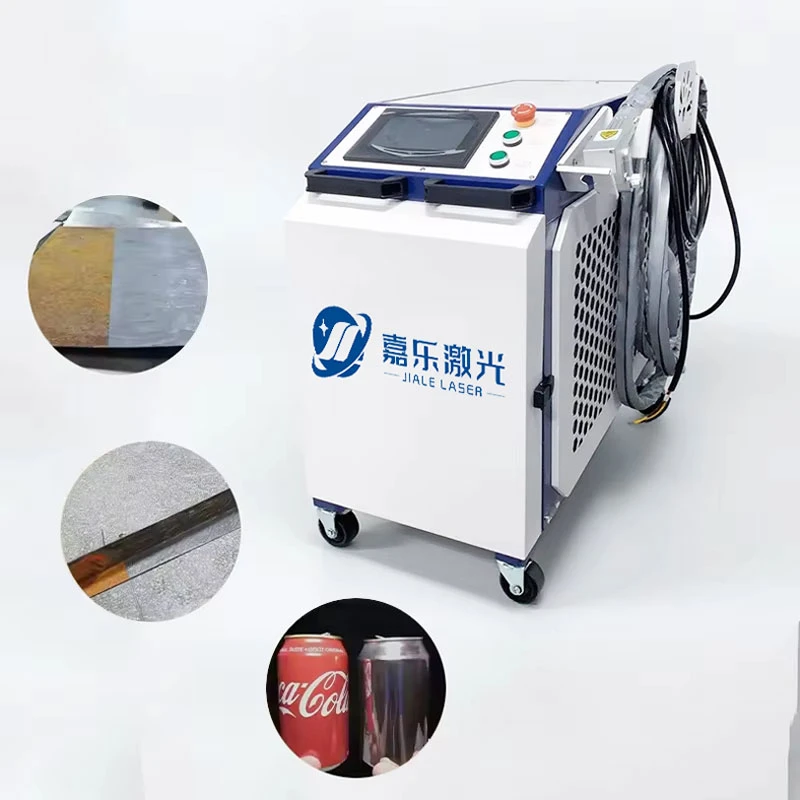
Industrial Manufacturing
Metal Processing: Removal of oxide layers from weld seams, mold release agent residue from mold surfaces, and rust-preventive oil from metal surfaces.
Electronics Industry: Cleaning of PCB boards and semiconductor chip surfaces, removing microparticles or organic matter.
Aerospace: Cleaning of carbon deposits and coatings from high-temperature components such as engine blades and turbine disks.
Cultural Heritage Conservation
Removal of dirt, rust, or old coatings from the surfaces of cultural relics to restore their original appearance (e.g., bronzes, stone carvings).
Medical Field
Cleansing of biofilms or chemical residues from the surfaces of medical devices to ensure a sterile environment.
New Energy Industry
Cleansing of dust or coatings from photovoltaic panels to improve power generation efficiency; cleaning impurities from the surfaces of lithium battery electrode materials.
Comparison of The Technical Advantages of Continuous Laser Cleaning Machines
| Cleaning method | Continuous laser cleaning | Traditional cleaning (chemical/mechanical) |
|---|---|---|
| Environmental protection | No chemical pollution, low waste | Wastewater and waste residue are generated and need to be treated |
| accuracy | Micron-level, capable of localized cleaning | Tool-dependent, prone to damaging the substrate |
| efficiency | High speed, suitable for mass production | Slow speed, high labor costs |
| applicability | Complex structures and precision parts | Simple flat or rough-finished scenes |
| Maintenance costs | Low cost (no consumables required) | High (requires replacement of abrasive or solvent) |
Conclusion
With its advantages of high efficiency, environmental friendliness, and precision, continuous laser cleaning machines have become an important tool in the field of modern industrial cleaning, especially in high-end manufacturing, precision machining, and scenarios with strict environmental protection requirements, where they are irreplaceable.