
What is Pulsed Laser Cleaning Machine?
In industrial manufacturing, cultural relic preservation, and even precision electronics, surface cleanliness often determines the final quality and performance of a product. Traditional cleaning methods, whether due to the corrosion of chemical reagents, the wear and tear of mechanical polishing, or the dampness of high-pressure water jets, all face challenges related to environmental protection, precision, or damage to the substrate.
Table of Contents
What is Pulsed Laser Cleaning Machine?
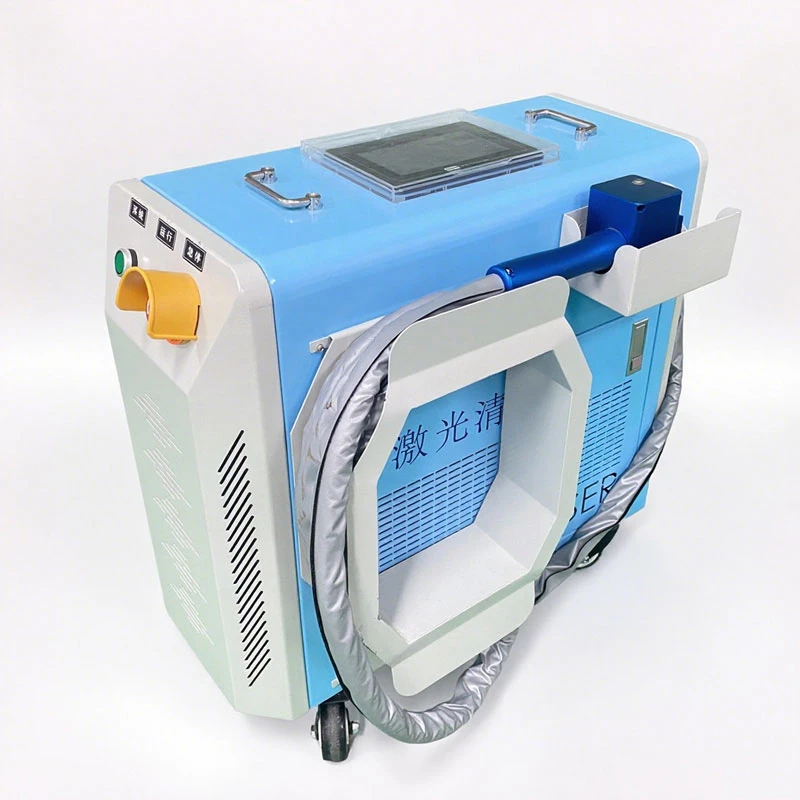
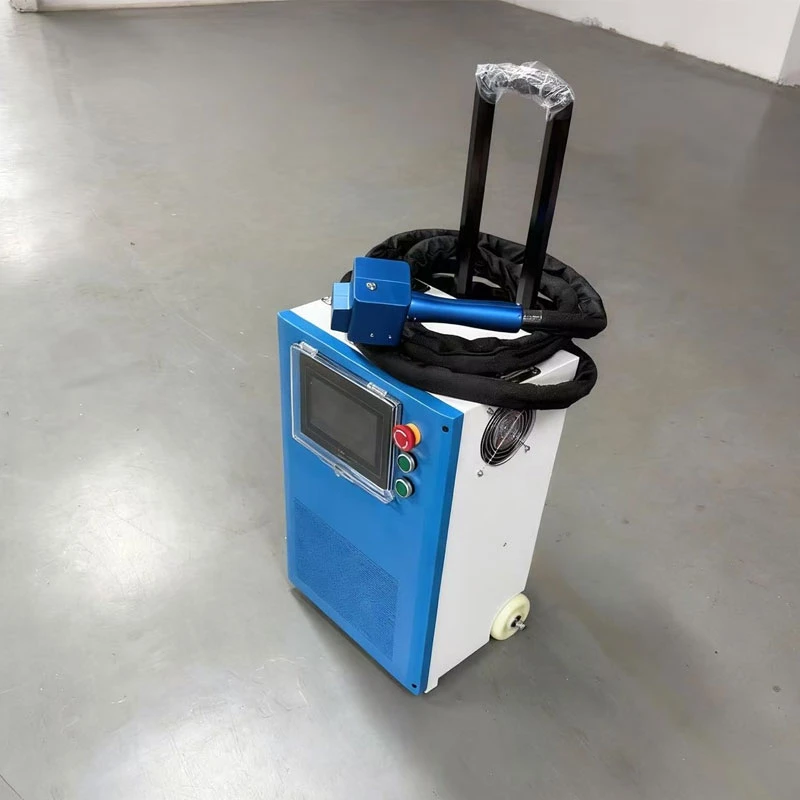
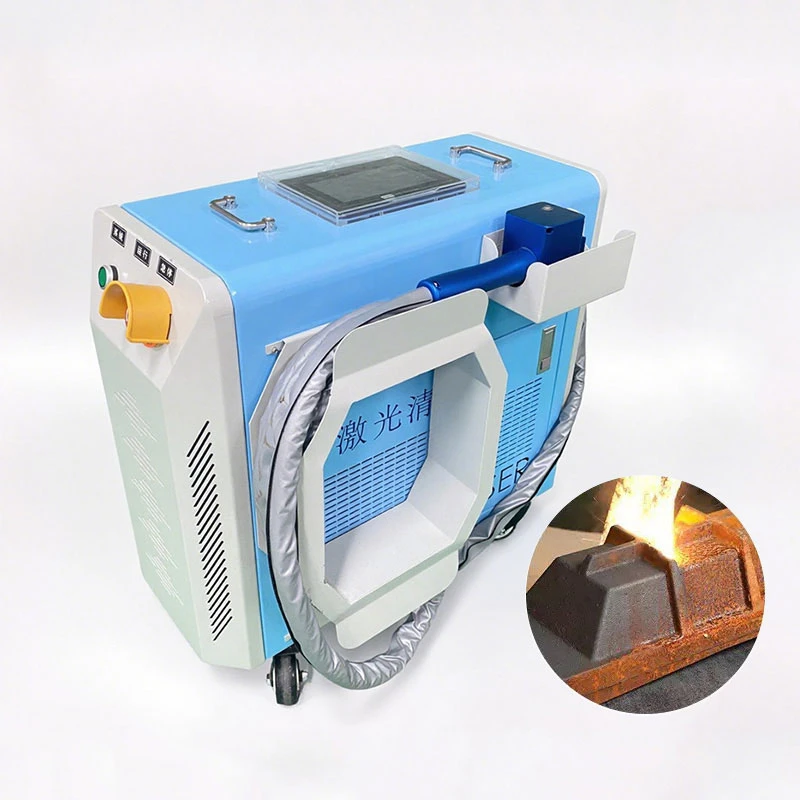
pulsed laser cleaning machine is an advanced cleaning device that uses a high-energy pulsed laser beam to remove contaminants from the surface of materials. Its core principle is to achieve non-contact, high-precision surface cleaning through the photothermal and photomechanical effects generated by the interaction between the laser and the material.
Working Principle of Pulsed Laser Cleaning Machine
Pulsed Laser Characteristics
The equipment emits short-pulse (nanosecond to femtosecond) high-energy laser beams, instantly generating extremely high temperatures (thousands to tens of thousands of degrees Celsius) on the material surface, causing contaminants (such as oil, rust, coatings, oxides, etc.) to rapidly vaporize or peel off.
Mechanism of Action
Photothermal Effect: Laser energy is absorbed by the contaminants and converted into heat energy, causing them to melt or vaporize.
Photomechanical Effect: Laser-induced shock waves or plasma expansion generate mechanical force, directly peeling off contaminants.
Selective Cleaning: By adjusting laser parameters (wavelength, pulse width, energy density, etc.), precise cleaning can be achieved for different contaminants and substrates, avoiding damage to the substrate.
Advantages of Pulsed Laser Cleaning Machines
Non-contact Cleaning
Eliminating the need for chemical solvents or mechanical friction, avoiding physical damage or chemical corrosion to the substrate, making it especially suitable for cleaning precision parts and brittle materials (such as glass and ceramics).
High Precision and Controllability
The cleaning area can be precisely controlled through parameters such as spot size and scanning speed, achieving micron-level precision, suitable for cleaning complex structures or tiny components.
Environmentally Friendly and Efficient
No chemical waste discharge, reducing environmental pollution; the cleaning process is fast (usually completed in seconds to minutes), suitable for large-scale automated production.
Multifunctionality
Can clean various substrates such as metals, plastics, ceramics, and composite materials, removing various contaminants such as oil, rust, coatings, oxides, and particulate matter.
Applications of Pulsed Laser Cleaning Machines
Industrial Manufacturing
Automotive Industry: Cleaning engine parts, mold surfaces of oil and rust.
Aerospace: Removing coatings from aircraft blades and contaminants from composite material surfaces.
Electronics Industry: Cleaning PCB boards and semiconductor chip surfaces of minute particles.
Mold Industry: Removing residual resin or release agents from mold surfaces, extending mold life.
Cultural Heritage Conservation
Cleansing dirt and rust from the surfaces of ancient buildings, sculptures, and cultural relics, restoring their original appearance without damaging the materials.
Medical Field
Cleansing biofilms or residues from the surfaces of medical devices, ensuring a sterile environment.
New Energy Industry
Cleansing contaminants from the surfaces of photovoltaic panels and lithium battery electrodes, improving energy conversion efficiency.
Comparison With Traditional Cleaning Methods
| Comparison items | Pulsed laser cleaning machine | Traditional cleaning methods (chemical/mechanical) |
|---|---|---|
| Contact method | Non-contact | Chemical soaking or mechanical friction |
| Substrate damage | 极Extremely low (controllable parameter) | May corrode or scratch the substrate |
| Environmental protection | No waste liquid, no pollution | Chemical waste liquids require treatment as they may pollute the environment. |
| accuracy | micron level | Reliant on manual operation, resulting in low precision. |
| applicability | Multiple materials and complex structures | Limited material types and structures |
| cost | High initial investment, low long-term operating costs | The cost of chemical solvents and consumables continues |
Conclusion
Pulsed laser cleaning machines, with their advantages of non-contact operation, high precision, and environmental friendliness, have become an important tool in the modern industrial cleaning field. They are especially suitable for scenarios with high cleanliness requirements and fragile substrates, making them an ideal alternative to traditional cleaning methods.