
What are The Differences Between Laser Welding and TIG Welding?
In the field of metal processing and manufacturing, laser welding and TIG welding are two mainstream and widely used welding technologies. Due to differences in their core principles and heat source characteristics, they exhibit significant differences in welding efficiency, processing accuracy, weld quality, and applicable scenarios. This article comprehensively analyzes the differences between the two from the dimensions of core principles, welding characteristics, applicable scenarios, cost, and operation, to help in accurate selection.
Table of Contents
What is Laser Welding?
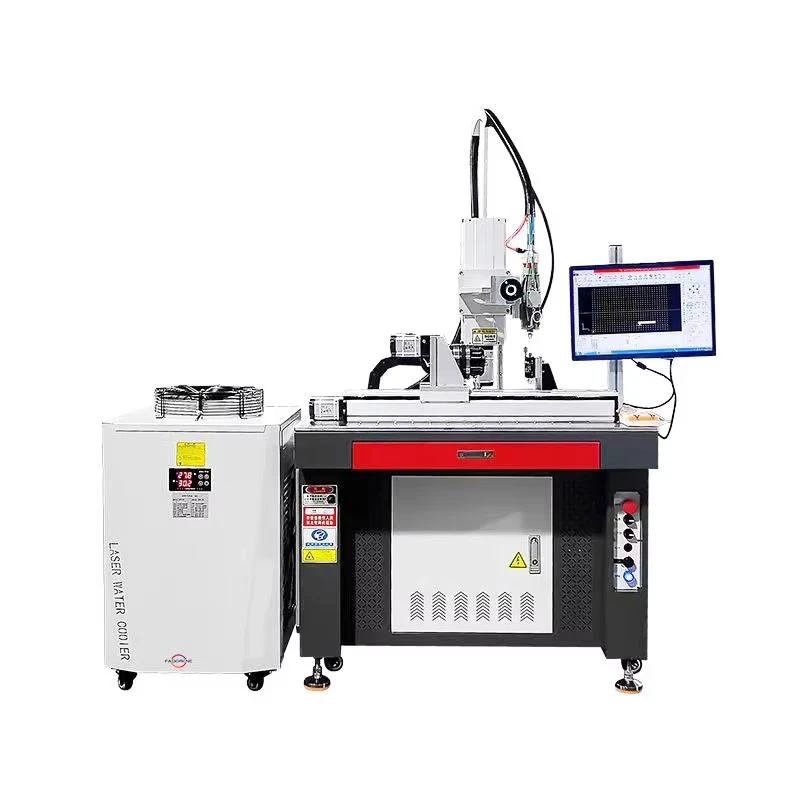
Laser welding is a highly efficient and precise welding technology that uses a high-energy-density laser beam as a heat source to melt and join materials. It focuses the laser onto a tiny area through an optical system, instantly generating high temperatures that melt the metal to form a weld. It offers advantages such as a small heat-affected zone, low deformation, high precision, and high speed.
What is Argon Arc Welding?
Argon arc welding is a welding technique that uses argon gas as a shielding gas and an electric arc to generate high temperatures between a tungsten electrode and the workpiece to fuse metals. It effectively isolates oxygen and nitrogen from the air, preventing weld oxidation and resulting in high-quality, dense, and spatter-free weld joints.
The Principles of Laser Welding and Argon Arc Welding
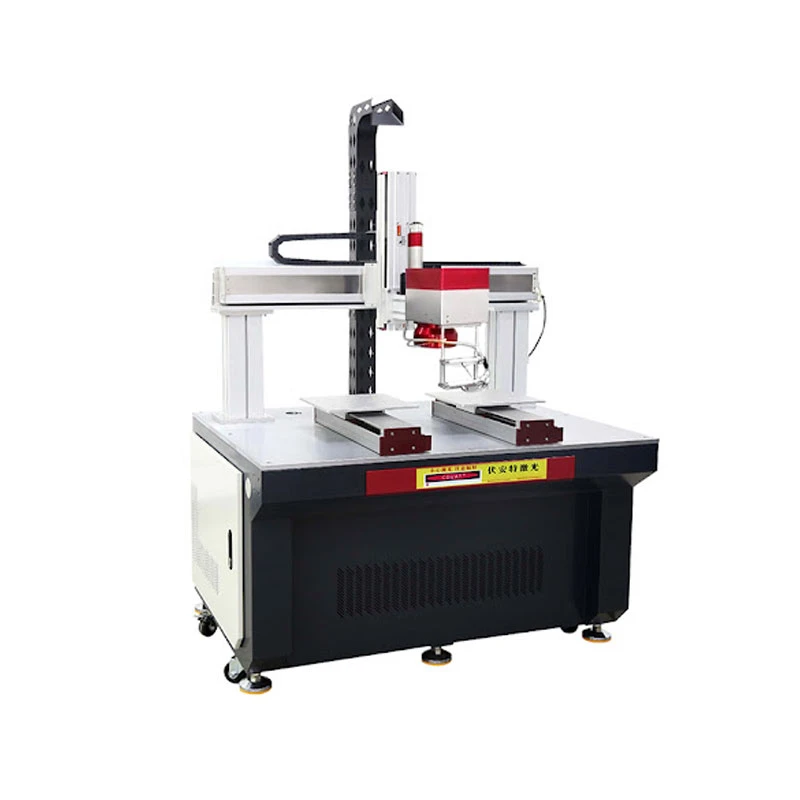
Laser Welding
Laser welding is a type of high-energy beam welding. Its core principle is to use a laser to generate a high-energy-density laser beam, which is focused and precisely projected onto the welding area, instantly melting or even vaporizing the metal material to form a molten pool. After cooling, the weld is complete. The entire process is non-contact, requiring no electrode contact with the workpiece. Only an inert gas is needed to prevent oxidation, and the energy is concentrated in an extremely small area (the spot diameter can reach 0.01mm).
Argon Arc Welding
Argon arc welding (also known as TIG welding or tungsten inert gas welding) is a type of arc welding. Its core principle is to use the electric arc (approximately 3800℃) generated between a tungsten electrode and the workpiece as a heat source to melt the base material and filler wire. Simultaneously, argon gas is ejected from the welding torch nozzle, forming a protective layer around the molten pool to isolate it from air and prevent oxidation. The welding process requires the tungsten electrode to be close to the workpiece, making it a contact welding process that relies on the heat diffusion of the electric arc to achieve fusion.
Features of laser Welding and Argon Arc Welding
Welding Efficiency
Laser Welding: Highly concentrated energy, extremely fast welding speed, 3-5 times that of TIG welding. Taking a 1mm thick stainless steel sheet as an example, laser welding can weld 3-5 meters per minute, suitable for large-scale automated production.
TIG Welding: Dispersed heat, slow welding speed (typically <5mm/s), relies on manual operation, suitable for small-batch production, but extremely inefficient for large-scale production.
Heat Affected Zone and Workpiece Deformation
Laser Welding: Extremely small heat-affected zone (only about 1/10 of that of TIG welding), heat is concentrated in the local weld seam. Thin plates (<1mm) show almost no deformation or discoloration after welding, suitable for precision parts and high-aesthetic products.
TIG Welding: Large heat-affected zone (5-8mm), the entire workpiece is significantly heated. Thin plates are prone to deformation, warping, and discoloration, and deformation is more difficult to control after welding thick plates.
Weld Quality
Laser Welding: Achieves self-fusion welding, producing narrow, smooth welds with uniform fish-scale patterns, minimal porosity and spatter, and requiring no grinding or polishing in most cases; stable penetration depth, high depth-to-width ratio, and high weld strength.
Argon Arc Welding: Typically requires filler wire, resulting in wider welds with rough surfaces, requiring post-weld grinding and polishing for smoothness; prone to defects such as undercut and cracking; weld consistency depends heavily on welder skill.
Precision and Controllability
Laser Welding: The laser beam can be precisely focused with a positioning error ≤0.1mm, enabling welding of tiny parts and precision gaps. It is also easily integrated with automated equipment (such as robotic arms and CNC systems) for precise control throughout the process.
Argon Arc Welding: Poor arc controllability, low tolerance for workpiece assembly tolerances, and difficulty in welding small gaps; operation depends heavily on welder experience, and weld quality varies significantly between different batches and welders.
Applications of laser welding and argon arc welding
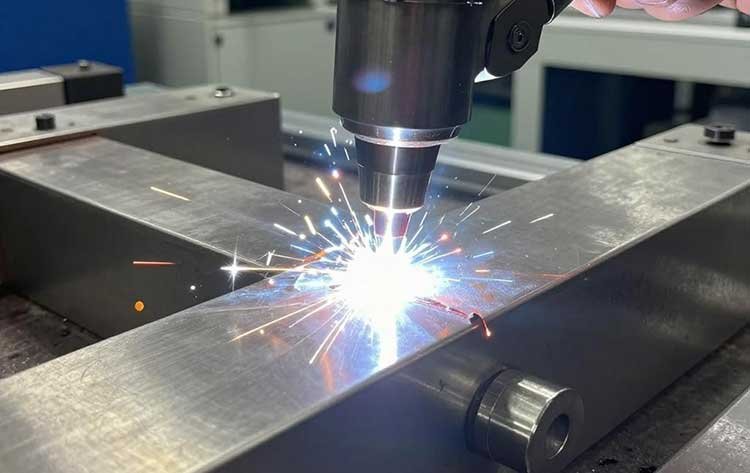
Both laser welding and TIG welding are used in manufacturing. However, due to their different properties, their applications also differ.
Laser welding has a very wide range of applications, specifically as follows:
| Industry | Items |
| Kitchen & Bathroom Hardware | Stainless steel sinks, kitchenware casings, bathroom accessories |
| Sheet Metal Industry | Thin-walled sheet metal parts, chassis and cabinets, decorative metal parts |
| Advertising sign | Stainless steel advertising letters, illuminated letters, metal signs |
| Automobile Manufacturing | Car body sheet metal, door components, exhaust pipes, transmission parts, lightweight aluminum parts |
| New Energy | Lithium battery tabs, cell casings, copper-aluminum connectors, new energy motor housings, charging pile accessories |
| 3C electronics | Mobile phone metal frame, laptop casing, camera accessories |
TIG welding has a very wide range of applications, specifically as follows:
| Industry | Items |
| Steel Structures | Stainless Steel Engineering Frames, Equipment Racks |
| Pipelines | Industrial Stainless Steel Pipelines, Plumbing Pipelines, Chemical Fluid Pipelines, Pressure Pipelines |
| Aluminum Alloys | Aluminum Products, Aluminum Alloy Frames |
| Automobile Manufacturing | Car body sheet metal, door components, exhaust pipes, transmission parts, lightweight aluminum parts |
| Doors and Windows | Stainless Steel Doors and Windows |
| Environmental protection equipment | Environmental purification equipment |
Conclusion
As the manufacturing industry upgrades towards precision and automation, the application scenarios of laser welding continue to expand. However, argon arc welding, with its low cost and high versatility, will still occupy an important position in fields such as thick plate processing and on-site construction. The two complement each other and coexist, jointly meeting the diverse needs of metal processing.