
What is Laser Marking?
Laser marking, a common laser technology, is widely used in various industries such as automotive, food and pharmaceutical, and hardware manufacturing. Laser marking can leave permanent marks on material surfaces, which can take various forms, including text, symbols, and patterns. This article will provide a comprehensive overview of the laser marking process.
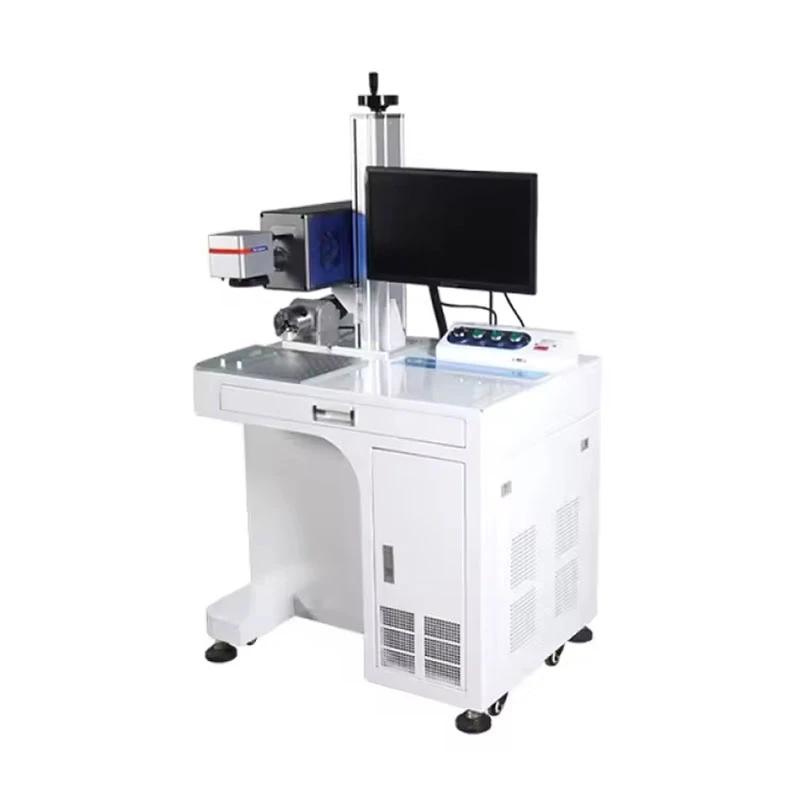
Table of Contents
Definition of Laser Marking
Laser marking uses a high-energy-density laser beam to locally irradiate the surface of a workpiece, vaporizing the surface material or triggering a specific color-changing chemical reaction, thereby leaving a permanent mark on the material surface. This mark can take various forms, including text, symbols, and patterns, and the character size can be flexibly adjusted between millimeters and micrometers. This characteristic makes it play a unique role in the field of product anti-counterfeiting.
Features of Laser Marking
(1) Non-contact processing
During laser marking, there is no direct mechanical contact between the laser beam and the workpiece, and no mechanical compression or stress is generated, thus preventing damage to the processed items. This characteristic makes laser marking particularly suitable for some precision and fragile workpieces, such as electronic components and precision mechanical parts, effectively ensuring the original precision and quality of the workpiece.
(2) Wide material adaptability
Laser marking can mark almost all types of materials, including metals (such as steel, copper, aluminum, etc.), plastics, glass, ceramics, wood, leather, etc. Different materials react differently to laser light. For metallic materials, the laser usually melts and vaporizes the surface material to form a mark; for non-metallic materials, such as plastics, the laser energy triggers a photochemical reaction, changing the molecular structure of the material and thus causing a color change, forming a clear mark.
(3) High marking accuracy and durability
The laser beam, after being focused, is extremely fine, enabling micron-level marking with a minimum line width of 20μm and a line depth of less than 10mm. This high-precision marking can meet the needs of industries with extremely high requirements for marking detail, such as microelectronics and bioengineering. Furthermore, laser-marked marks are permanent, wear-resistant, and corrosion-resistant, and will not fade or blur over time, maintaining clear legibility for a long period.
(4) High processing efficiency and low cost
Laser marking is automatically controlled by a computer. The laser beam can move at high speed, and a marking process can usually be completed in a few seconds, making it ideal for online operations and mass production. Moreover, laser marking does not require additional consumables such as ink or molds. As long as the laser is working properly, it can process continuously for a long time, greatly reducing operating and maintenance costs.
(5) Environmentally friendly and pollution-free
Compared with traditional processing methods, laser marking does not generate pollutants such as waste liquid, waste gas, and waste residue, nor does it require the use of chemicals such as ink and solvents. It is a clean and environmentally friendly processing technology that conforms to the development concept of green production in modern industry.
Advantages of Laser Marking
High precision and micron-level machining capabilities
The laser beam can be focused to the micrometer level (up to ±0.005mm), clearly marking extremely small text, QR codes, or complex patterns, making it suitable for fields with extremely high marking accuracy requirements, such as IC chips and medical devices.
Non-contact processing
It can be used to make permanent marks on a variety of materials such as metal (stainless steel, aluminum alloy), plastic, glass, ceramic, and leather, and the effect is stable and consistent.
Wide range of applicable materials
It can be used to make permanent marks on a variety of materials such as metal (stainless steel, aluminum alloy), plastic, glass, ceramic, and leather, and the effect is stable and consistent.
Markings are permanent and durable
Lasers create permanent marks on material surfaces through vaporization or chemical reactions, making them wear-resistant, heat-resistant, and difficult to tamper with, thus greatly enhancing the product’s anti-counterfeiting capabilities.
High production efficiency
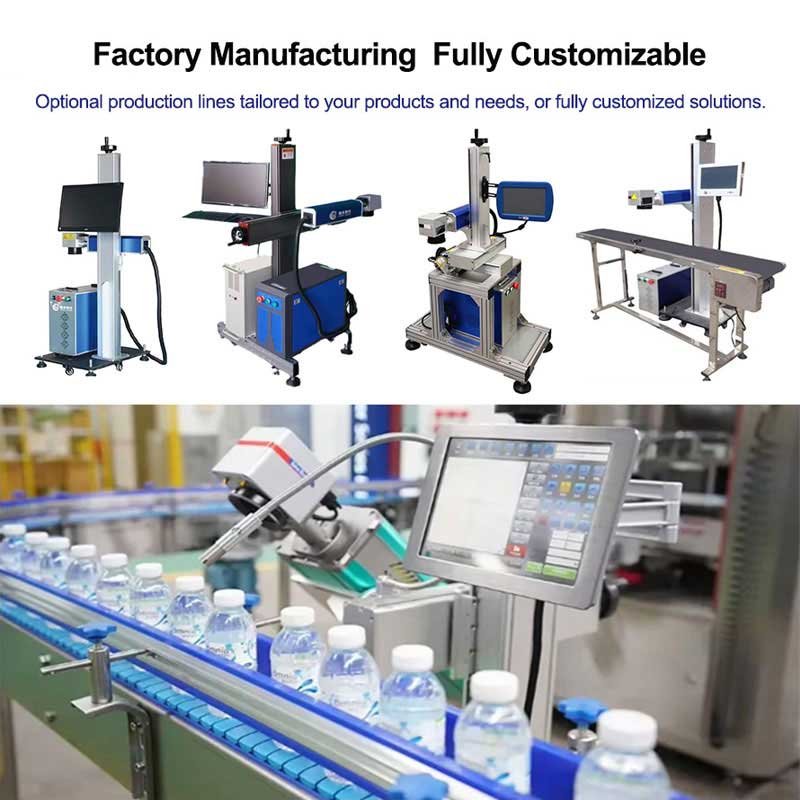
The marking speed can reach several thousand millimeters per second. Combined with galvanometer scanning and computer numerical control system, it can be seamlessly integrated into automated production lines to achieve high-speed continuous operation.
Which Industries Use Laser Marking?
Automotive and Aerospace
In the automotive and aerospace industries, components need to withstand extreme conditions such as high temperatures, vibration, and chemical corrosion. Laser marking is used to create permanent, clear markings, ensuring product traceability throughout its entire lifecycle.
Typical applications: engine components, chassis, vehicle identification numbers (VINs), braking systems, turbine blades, etc.
Electronics and Semiconductors
This industry demands extremely high marking precision, typically at the micrometer level. Laser marking enables precise marking on tiny electronic components without causing thermal damage.
Typical applications: Integrated circuit (IC) chips, printed circuit boards (PCBs), mobile phone/computer casings, electronic components (such as resistors and capacitors), batteries, etc.
Food, Beverage and Packaging
Laser marking prints production dates, expiration dates, batch numbers, and QR codes onto packaging. It is permanent, indelible, and environmentally friendly (no ink required).
Typical applications: plastic bottles, glass bottles, metal cans, cardboard boxes, packaging bags, etc.
Metalworking and Industrial Manufacturing
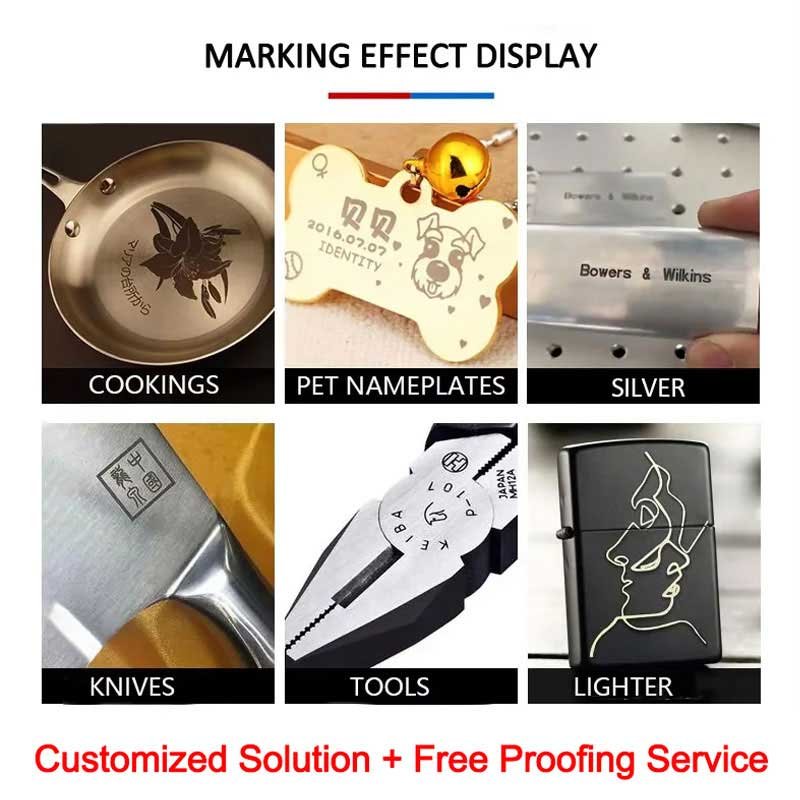
In industrial manufacturing, laser marking is used for product identification, inventory management, and quality traceability. The markings are wear-resistant and remain clear even in harsh industrial environments.
Typical applications include: hardware tools, automotive parts, metal nameplates, bearings, molds, screws, and nuts.
Jewelry and Luxury Goods
Laser marking offers high precision, allowing for branding, personalization, and anti-counterfeiting markings without damaging delicate surfaces, thus enhancing product value.
Typical applications include personalized engraving and brand logo marking on high-end watches, gold and silver jewelry, leather goods, and mobile phone cases.
Final Thoughts
After reading this article, we believe you have gained a basic understanding of laser marking, including equipment, tools, influencing factors, and applications. As a professional laser marking machine manufacturer, Jiale provides one-stop laser equipment services to meet various needs. If you have any questions about laser marking or our products, please feel free to contact us; we will provide you with customized solutions.