
Laser Cleaning:The Ultimate Guide
In the industrial and mold-making fields, laser cleaning protects the surface finish and structural integrity of molds. By precisely controlling the laser beam to scan the surface, and utilizing optical and thermal effects, contaminants are heated, evaporated, decomposed, or impact-removed in a very short time. The substrate material remains undamaged due to the short heat conduction time, thus protecting the surface finish and structural integrity of the mold. This article will provide a comprehensive introduction to laser cleaning to help readers better understand and apply it.
Table of Contents
What is laser cleaning?
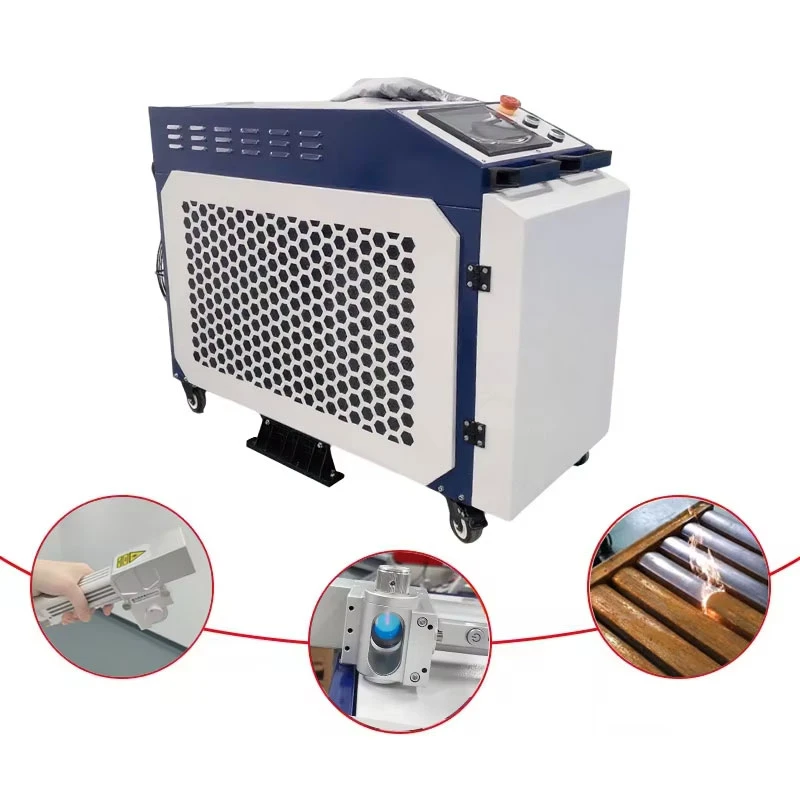
Laser cleaning is a process that uses a highly concentrated laser beam to irradiate the surface of an object, causing the contaminants to vibrate, burn, melt, and evaporate, thus detaching them from the surface. Laser irradiation of an object’s surface produces effects such as selective evaporation, rapid heating and cooling, plasma explosion, and peeling/removal.
Core principle of laser cleaning
Selective absorption: Laser wavelengths are efficiently absorbed by surface contaminants (such as rust, paint, and oil), while the substrate material (such as metals and ceramics) has a high reflectivity for specific wavelengths of laser light. This difference allows energy to be concentrated in the contamination layer, preventing damage to the substrate.
Instantaneous high-energy action: When the laser energy density exceeds the destructive threshold of the contaminant, the contaminant rapidly heats up, undergoing vaporization, decomposition, or combustion.
At high power densities (typically >10⁸ W/cm²), the contaminant absorbs energy and expands rapidly, forming plasma and generating shock waves that “explode” away debris, achieving highly efficient stripping.
What are the advantages of using laser cleaning?
- Non-contact and non-damaging: No physical friction or chemical reagents are required, avoiding scratches or corrosion of the substrate and protecting the precision structure and surface finish.
- Green and environmentally friendly: No wastewater or waste residue is discharged, and no harmful gases are produced, meeting the clean production requirements under the “dual carbon” target.
- High precision and strong controllability: It can be precisely focused on a micron-level area, making it suitable for complex curved surfaces, welds, grooves and other difficult-to-process parts.
- Good automation compatibility: It is easy to integrate with robotic arms or production lines to achieve remote control and intelligent cleaning, thereby improving production line efficiency.
How to use laser cleaning?
- Preparation
Ensure the laser cleaning equipment is properly connected to the power supply and that the cooling system is functioning correctly.
Check that the fiber optic transmission system is intact and that the focusing head is free from contamination or damage.
Preset appropriate laser parameters (wavelength, pulse frequency, energy density, scanning speed) according to the mold material and type of dirt.
- Positioning and Startup
Aim the laser cleaning head at the area to be cleaned, maintaining an appropriate distance (usually 10-30cm) to avoid collisions.
Start the equipment. The laser beam irradiates the mold surface, causing the dirt to rapidly vaporize, expand, or peel off due to energy absorption.
- Dynamic Cleaning
Move the laser head manually or via a robotic arm, evenly sweeping it across the mold surface, paying special attention to patterns, grooves, blind holes, and other hard-to-reach areas.
Inert gas (such as nitrogen) can be used for purging to promptly remove peeling material and prevent secondary contamination.
- Completion and Inspection
After cleaning, turn off the equipment and check the cleanliness of the mold surface.
Confirm that there are no residual contaminants and that the mold surface finish is undamaged.
Which industries need to use laser cleaning?
Laser cleaning has been widely used in many high-precision and heavy industrial sectors in the industrial and mold fields. With its non-contact, non-destructive, high-precision, and environmentally friendly characteristics, it has become a key technology to replace traditional cleaning methods.
Mold Manufacturing Industry
Tire Molds: Removes rubber residue and mold release agent carbon deposits, restores tread pattern clarity, and avoids damage to fine textures caused by traditional cleaning methods.
Plastic/Die Casting Molds: Effectively removes oil, carbon deposits, and coatings, protecting mold surface finish and extending service life.
Composite Material Molds: Suitable for online cleaning of carbon fiber molds, supporting a closed-loop “demolding-cleaning-reproduction” process in automated production lines.
Automobile manufacturing industry
Pre-welding treatment: Remove oil and oxide layers from the surface of the body steel panels to improve welding strength and quality consistency.
Painting system maintenance: Online cleaning of residual electrophoretic paint on skid supports to ensure stable operation of the conveyor line.
Powertrain components: Cleaning of precision parts such as engine blocks and piston rings to ensure assembly cleanliness.
Aerospace industry
Aircraft skin paint removal: Selectively removes old paint layers without damaging the aluminum alloy substrate, avoiding material fatigue caused by sandblasting.
Engine blade cleaning: Removes carbon deposits and oxides from high-temperature alloy components, ensuring safety during subsequent maintenance and remanufacturing.
Rail Transit Industry
High-speed rail wheelset rust removal: Automated cleaning of wheel axle surfaces to improve inspection accuracy and operational safety.
Car body weld cleaning: Removal of oxide layer from U-rib weld areas to ensure structural strength.
Electronics and Semiconductor Industry
Circuit board pad deoxidation: Precise removal of oxide layer from component pins to improve electrical contact reliability; only one irradiation is needed per pin.
Chip pre-packaging cleaning: Removal of micron-level contaminants to improve packaging yield; suitable for 3D stacked chip processes.
Shipbuilding and Marine Engineering
Propeller maintenance: Non-contact cleaning of marine deposits to protect precision curved surfaces.
Hull rust removal: Large-area, efficient removal of seawater corrosion rust layers, reducing dust and environmental pollution.
Energy and Power Industry
Wind turbine blade mold cleaning: Suitable for periodic maintenance of large composite material molds.
Transmission line foreign object removal: Drones equipped with laser equipment remotely remove kites, plastic bags, and other hanging objects, enabling live-line work.
Conclusion
In summary, laser cleaning technology is indeed an outstanding industrial cleaning technology. It overcomes the drawbacks of traditional cleaning methods and achieves the goals of efficient, environmentally friendly, and non-destructive cleaning! Good new cleaning technologies not only improve production efficiency but also protect our ecological environment.